 Goran Štimac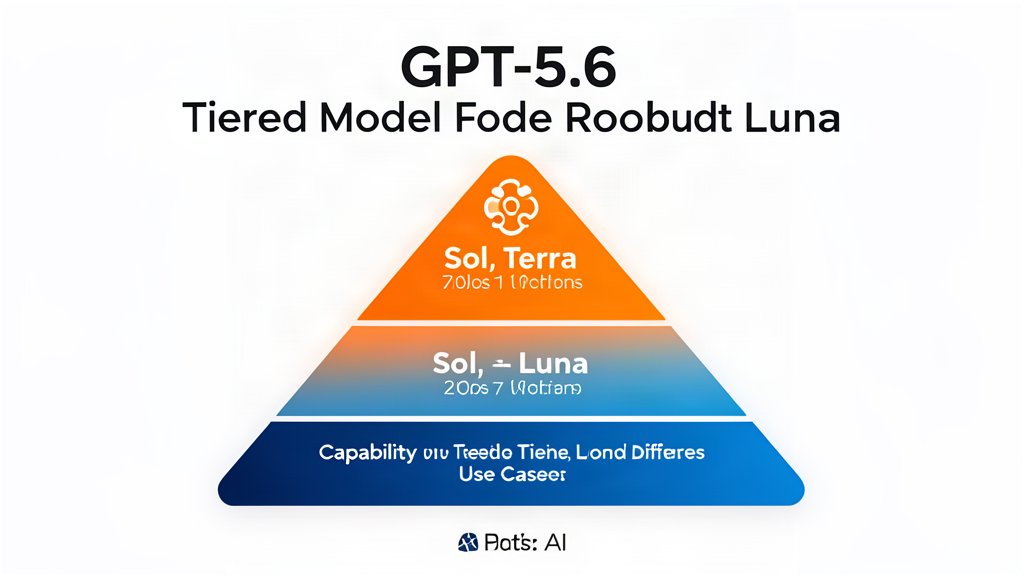
GPT-5.6 Sol, Terra, and Luna: What OpenAI’s Tiered Rollout Means for Teams
OpenAI’s GPT-5.6 preview is notable less for a single model name and more for a new way of packaging capability. The company is starting with a limited preview of three tiers: Sol, the flagship; Terra, the balanced everyday model; and Luna, the fast and affordable option. That structure is useful for teams that have been trying to force one model to do every job.
Why the tiered rollout matters
The strongest SEO phrase here is “GPT-5.6” itself, but the real user intent is about trade-offs. OpenAI says Terra is competitive with GPT-5.5 while being 2x cheaper, and Luna gives teams a lower-cost entry point for high-volume work. Sol sits at the top, aimed at complex coding, biology, and cybersecurity tasks where the model needs more room to reason.
That means product teams can finally map model choice to business value. High-value workflows can stay on Sol, while support summaries, templated responses, and lightweight automation can move to Terra or Luna.
What the preview tells builders
OpenAI describes the rollout as limited at first, with access going to a small set of trusted partners. That is not just a launch detail. It signals that the company wants to test the release carefully before broad distribution, especially because the model family arrives with a stronger safety stack and a deeper red-teaming process.
For builders, the takeaway is simple: model strategy now looks more like product tiering. You do not have to expose your users to one oversized default when the task only needs a cheaper tier.
flowchart LR
  A[GPT-5.6 task] --> B{Need best quality?}
  B -- Yes --> C[Sol]
  B -- No --> D{Need balanced cost/performance?}
  D -- Yes --> E[Terra]
  D -- No --> F[Luna]
Internal linking and search intent
The useful decision is not which tier sounds most impressive. It is which tier matches the job. Luna is easier to justify for volume, Terra is the sensible middle, and Sol is where the task needs more headroom. For teams using the new reasoning modes, the next question is how much thinking time a request actually deserves.
Bottom line
GPT-5.6 is a reminder that the best model strategy is rarely “always pick the biggest one.” Sol, Terra, and Luna let teams line up intelligence, speed, and cost with the actual job. That is better for budgets, better for latency, and easier to explain in product documentation.
Related areas
Related What I Do
These What I Do pages are matched from the subject matter of this article, creating a cleaner path from educational content to implementation work.
Continue reading
Related articles
Based on shared categories first, then the strongest overlap in tags.