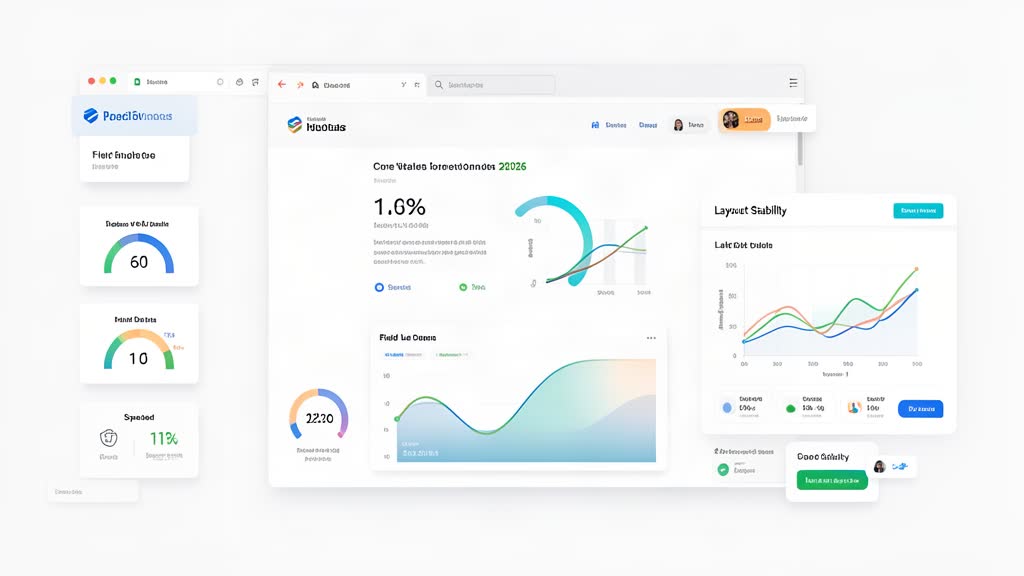
Core Web Vitals did not get new targets in 2026. Google’s thresholds remain LCP at 2.5 seconds or less, INP at 200 milliseconds or less, and CLS at 0.1 or less, measured at the 75th percentile. INP is still the interaction metric; FID is no longer the target.
For single-page applications, Chrome 151 adds better support for tracking Core Web Vitals across soft navigations. Route changes in an SPA can now produce useful evidence instead of disappearing into a single page-load score.
What should you fix first? Improve LCP by prioritizing the hero image, critical CSS, and font loading. Improve INP by shortening long tasks and keeping event handlers cheap. Prevent CLS by reserving space for images, ads, and embeds before they load.
Use CrUX or real-user monitoring to decide whether a change helped, segmented by device. Use Lighthouse to diagnose causes, not as a standalone scoreboard. A perfect lab score without better field data is the wrong win.
Treat this as a process, not a one-off audit. Re-measure the same field metrics after each release and compare the 75th percentile over several weeks before judging a change. Persistent INP problems usually live in the event handlers users actually trigger; persistent LCP problems usually trace back to render-blocking resources.
Sources: Google Search Central, web.dev Web Vitals, and the SPA measurement FAQ.
Related areas
Related What I Do
These What I Do pages are matched from the subject matter of this article, creating a cleaner path from educational content to implementation work.
Continue reading
Related articles
Based on shared categories first, then the strongest overlap in tags.