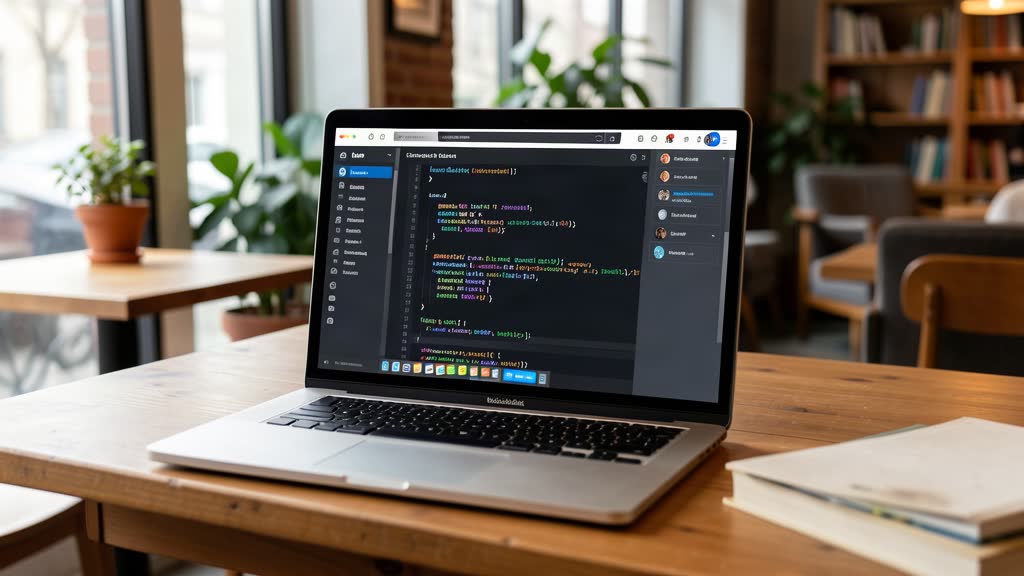
June 2026 marks a turning point for local AI coding. Open-weight models in the 30-35 billion parameter range, using Mixture-of-Experts (MoE) architecture, now deliver competitive coding performance on consumer hardware — no cloud API keys required, no data leaving your machine, and no per-token bills.
The Models Making This Possible
Several new models released in mid-2026 are viable for local coding assistance:
- Cohere North Mini Code: 30B MoE (3B active parameters), 256K context window (488K via Ollama), Apache 2.0 license. Scores 33.4 on the Artificial Analysis Coding Index — outperforming much larger models.
- Qwen3-Coder series — competitive coding performance from Alibaba’s Qwen team
- GLM 5.2, MiniMax M3, Kimi K2.7 Code, DeepSeek V4 — each offering different trade-offs in speed, accuracy, and context window
The key architectural insight is the MoE design. A 30B MoE model with 3B active parameters runs at roughly the same speed as a 3B dense model while delivering capability closer to a 30B dense model. On a machine with 16-32GB VRAM, quantized versions of these models fit comfortably — a q4 quant of North Mini Code requires about 19GB.
Why Local Coding Agents Matter Now
Three converging trends make this the moment:
Privacy. Code is increasingly sensitive — proprietary algorithms, unreleased products, internal API designs. Running a coding agent locally means your source code never leaves your machine. For regulated industries and organisations with data residency requirements, this is a decisive advantage.
Cost. Heavy users of proprietary coding assistants can spend hundreds of dollars per month on API tokens. A local model costs only electricity and hardware depreciation. For an individual developer or small team doing intensive agentic coding, the economics favour local within months.
Ollama ecosystem maturity. Ollama now supports launching local agents directly: ollama launch claude --model north-mini-code-1.0. Agents like OpenCode, OpenClaw, and Hermes Agent support local models as backends. The toolchain is no longer experimental — it works today on a standard workstation.
For developers choosing between local and hosted options, the DeepSeek V4 Flash vs Pro comparison offers practical guidance on model selection for different workloads.
Related areas
Related What I Do
These What I Do pages are matched from the subject matter of this article, creating a cleaner path from educational content to implementation work.
Continue reading
Related articles
Based on shared categories first, then the strongest overlap in tags.