AI coding tools become useful when they stop behaving like a demo and start fitting into an actual workflow.
That is why GitHub Copilot’s current agent features are more interesting than another generic promise about AI writing code. The practical shift is not just that agents can do more. It is that GitHub now documents clearer ways to manage sessions, steer work in progress, reuse skills, and reduce model-selection friction.
What Changed In Practice
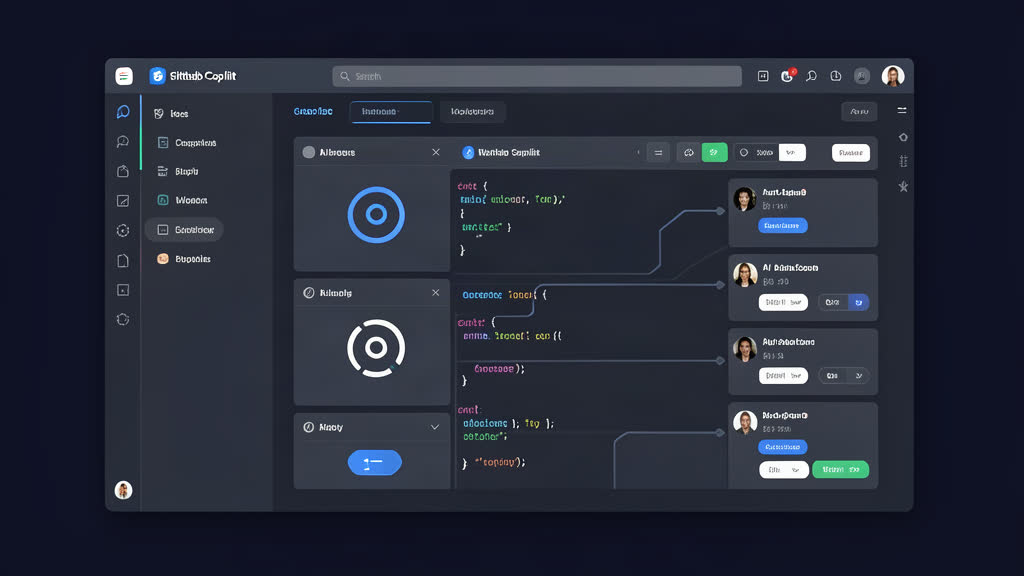
The current GitHub docs describe agent management as a workflow surface, not a hidden background process. You can run multiple agent sessions, watch live logs, steer a session mid-run, and bring a session into VS Code or the Copilot CLI when it is time to take over locally.
That matters because most developer teams do not need magical autonomy. They need bounded delegation.
If an agent can take a test-writing task, a refactor, or a documentation pass off your hands while still staying visible and reviewable, it becomes easier to fit into normal engineering work.
Why Skills Matter
GitHub’s current skills model is one of the more practical changes.
The docs define skills as folders of instructions, scripts, and resources that agents can load when relevant. In plain terms, that means a team can teach the assistant how a repository wants common work done instead of repeating the same guidance in every prompt.
That is a better pattern than expecting every developer to remember the perfect incantation. Reusable skills make repeated tasks less noisy and reduce prompt drift across a team.
Why Auto Model Selection Matters More Than It Sounds
Model choice has become its own form of overhead. Teams waste time debating which model to use, when to switch, and whether latency or rate limits will get in the way.
GitHub’s current auto model selection is interesting because it tries to remove that decision for routine work by choosing from supported models based on availability and performance. The feature is explicitly framed around lower latency, fewer errors, and less rate-limit friction.
That will not remove the need for model-aware judgment on harder tasks, but it does reduce one more piece of operational noise for day-to-day development.
The Workflow Still Needs Boundaries
None of this means a team should hand over broad write access and hope for the best.
Agent sessions still need scope, checkpoints, and review. Skills still need to be maintained. Auto model selection still needs policy controls. The useful pattern is not total autonomy. It is visible automation with clear approval boundaries.
Practical Rule
Use coding agents for well-bounded work that can be reviewed, steered, and handed back to a human quickly. The more visible the session, the reusable the skill, and the clearer the approval boundary, the more likely the workflow is to hold up outside a demo.
Official resources: GitHub Copilot Agent Management, Agent Skills, and Auto Model Selection.
Related areas
Related What I Do
These What I Do pages are matched from the subject matter of this article, creating a cleaner path from educational content to implementation work.
Continue reading
Related articles
Based on shared categories first, then the strongest overlap in tags.