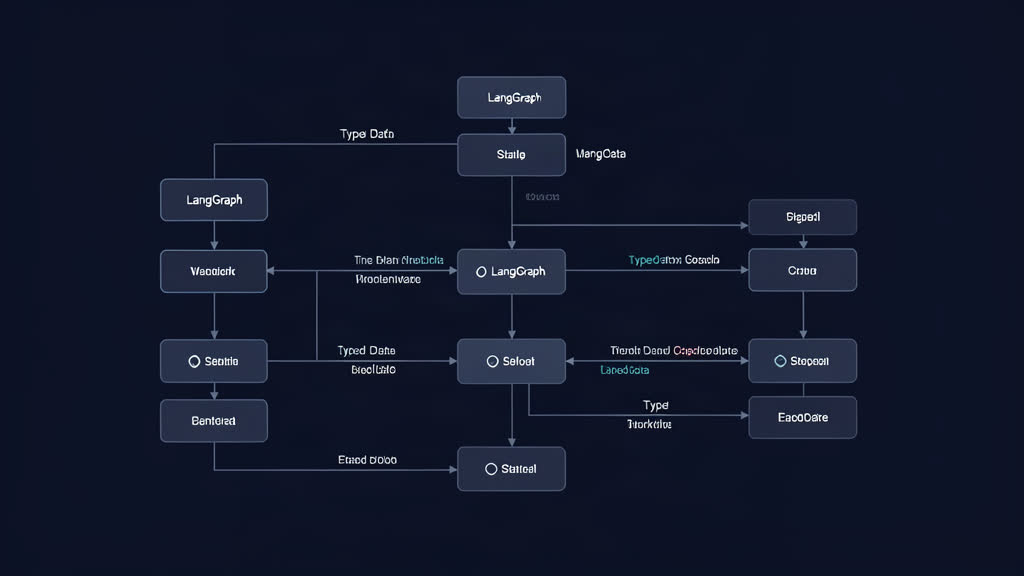
LangGraph v1.1 is a useful release because it improves the parts of agent systems that tend to get messy first: state, streaming, and typing.
That matters when you move beyond toy agents. Once a workflow needs checkpoints, branching, typed inputs, or reliable replay, the graph layer becomes the real architecture.
State Becomes Easier To Define
The biggest change in the JavaScript release is the introduction of StateSchema.
That gives you a cleaner way to define graph state with schema libraries you already use, instead of forcing one narrow style of state definition. LangGraph also adds support for Standard JSON Schema and new state value primitives like ReducedValue, UntrackedValue, and MessagesValue.
That is important because agent state is rarely just “one object.”
Real workflows usually need:
- persistent messages,
- accumulated results,
- transient runtime values,
- fields that are easier to validate than to hand-roll.
The new primitives make that model easier to express.
Type Safety Gets Stronger
The Python changelog adds another production-friendly improvement: versioned streaming and invoke formats.
With version="v2", stream() and invoke() return more structured outputs, including typed chunks and structured response objects. That makes graph execution easier to reason about and easier to integrate with application code that expects predictable shapes.
That may sound like a small API change, but it reduces friction in the exact places that tend to cause debugging pain:
- interpreting streamed chunks,
- handling interrupts,
- restoring state,
- making typed data flow through the graph.
The result is less glue code around the graph itself.
Why This Matters For Production Agents
LangGraph is most valuable when you care about control, not just generation.
You want a workflow that can pause, resume, branch, and stay understandable months later when the business asks for a change. LangGraph v1.1 helps with that by making schema definitions and streaming output less awkward.
That is especially useful for consulting work because client systems rarely stay static. The more understandable the graph model is, the easier it becomes to hand it over, extend it, and debug it.
The Main Practical Wins
If I reduce the release to the parts that matter most in real projects, I would call out four wins:
- Better state modeling with
StateSchemaand schema-compatible definitions. - More predictable typed output for streaming and invoke flows.
- Cleaner support for custom reducers and transient runtime state.
- Less lock-in to a single validation pattern.
Those are the kinds of changes that save time after the first prototype is working.
When To Care About It
If you are building any of the following, this update is worth paying attention to:
- AI assistants with multi-step workflows.
- RAG systems with checkpoints or human review.
- Agent tools that need typed state and replay.
- Multi-turn flows where you need to know exactly what changed between steps.
That is where LangGraph starts to feel less like a framework and more like the backbone of the application.
Bottom Line
LangGraph v1.1 is a good update for stateful AI work because it makes the graph easier to define and the execution path easier to trust.
If you are building production agents, the API surface now lines up better with the way real workflows are designed.
Reference: LangGraph changelog and LangGraph Python changelog.
Related areas
Related What I Do
These What I Do pages are matched from the subject matter of this article, creating a cleaner path from educational content to implementation work.
Continue reading
Related articles
Based on shared categories first, then the strongest overlap in tags.