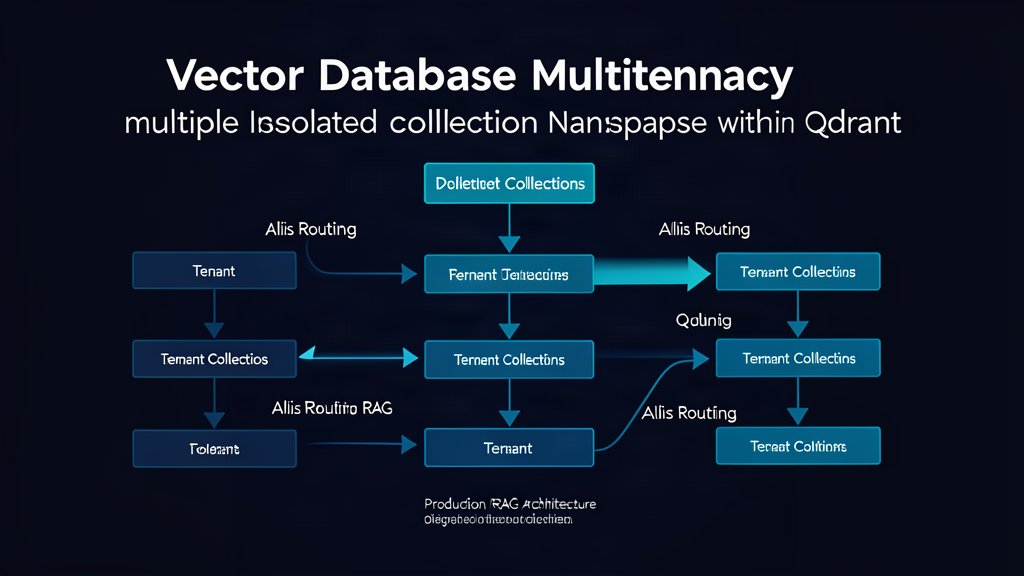
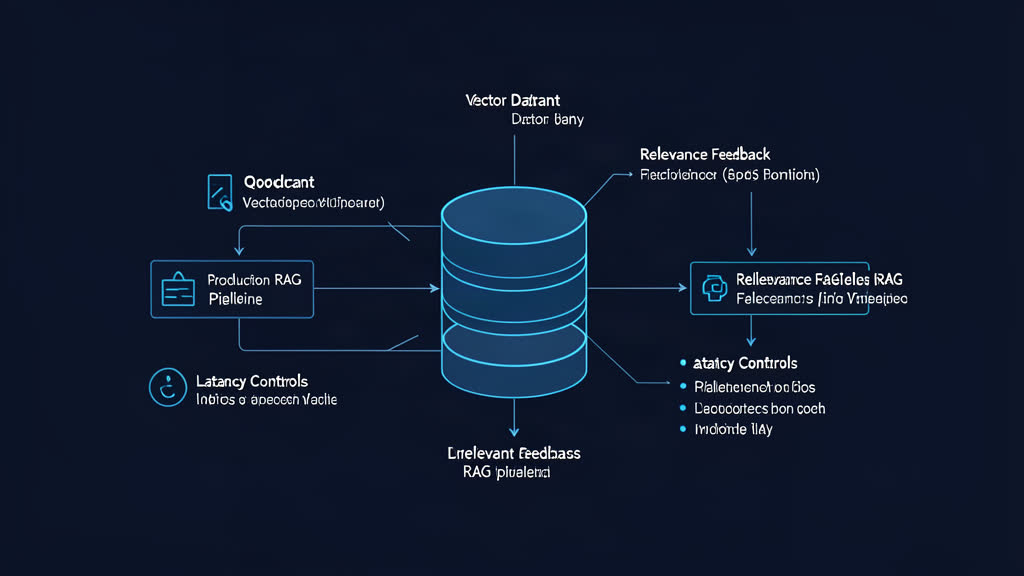
Qdrant 1.17 is not just a feature release.
It is a release that makes a production retrieval system easier to tune, observe, and trust. That matters because RAG systems do not fail only when relevance is bad. They also fail when latency becomes inconsistent, when indexing falls behind writes, or when operators cannot see what the cluster is doing.
That is where this release is useful.
Relevance Feedback Makes Search Smarter
One of the most interesting additions in Qdrant 1.17 is the Relevance Feedback Query.
The idea is simple: judging whether a result is relevant is often easier than writing the perfect search query up front. Qdrant uses lightweight feedback on a small set of results to steer retrieval toward better matches without relying on expensive manual labeling or a separate offline tuning loop.
For production RAG, that is useful because it gives you another way to improve retrieval quality when users do not search in the same language your embeddings expect.
In practice, this matters when you have:
- technical queries with exact terms,
- business queries with vague intent,
- mixed content where the best result is not always the closest embedding match.
Relevance feedback gives the retriever a better chance of learning what “good enough” actually looks like.
Latency Is Now A First-Class Topic
Search quality is only half the story.
If your retrieval layer gets slower as data grows or writes increase, the user experience suffers even when the results are good. Qdrant 1.17 addresses this with a few production-minded changes:
- An update queue that helps absorb write pressure.
- A
prevent_unoptimizedsetting that reduces the creation of large unoptimized segments. - Delayed fan-outs that can fall back to another replica if the first one is slow.
That combination matters because it gives you knobs for both throughput and tail latency. In other words, the system is easier to keep responsive when ingestion and search compete for resources.
For a service business building AI search or RAG into customer-facing products, that stability is not optional. A slower retrieval layer quickly becomes a support problem.
Observability Matters As Much As Retrieval
Another useful part of Qdrant 1.17 is operational visibility.
The release adds cluster-wide telemetry and optimization monitoring, which makes it easier to understand what is happening across peers, shards, and background optimization work. It also improves the Web UI point search flow so inspecting data feels more practical.
That is the kind of change that matters when a system moves from prototype to something people rely on.
You do not want to guess whether performance problems come from indexing, shard behavior, or a query pattern. Better visibility shortens that debugging loop.
Why This Release Fits Real Projects
Qdrant 1.17 feels aimed at teams that are already beyond “just try vector search.”
It gives you more control over:
- how relevance is refined,
- how write pressure affects search,
- how latency is handled under load,
- how the cluster is monitored.
That is exactly where production RAG work usually becomes expensive: not in the first demo, but in the second and third iteration when the system needs to be reliable.
What I Would Do With It
If I were updating a client system on Qdrant 1.17, I would start with three checks:
- Measure whether hybrid search still returns the right mix of semantic and exact matches.
- Look at query latency under realistic write load.
- Verify the telemetry and optimization views tell you something actionable before you need to troubleshoot.
That gives you a practical baseline before you start tuning more aggressively.
Bottom Line
Qdrant 1.17 is a strong update for anyone building RAG or vector search into a real product.
The release is not only about better retrieval. It is also about making retrieval more operationally manageable, which is the part many teams discover too late.
Reference: Qdrant 1.17 release notes and Qdrant changelog.
Related areas
Related What I Do
These What I Do pages are matched from the subject matter of this article, creating a cleaner path from educational content to implementation work.
Continue reading
Related articles
Based on shared categories first, then the strongest overlap in tags.