The strongest thing about this video is that it refuses to treat AI agents as magic. It frames an agent as an application that sits in front of a model, manages messages, and turns messy human intent into something the model can actually work with. That matters for DevOps and platform engineers because it moves the discussion from hype to system design.
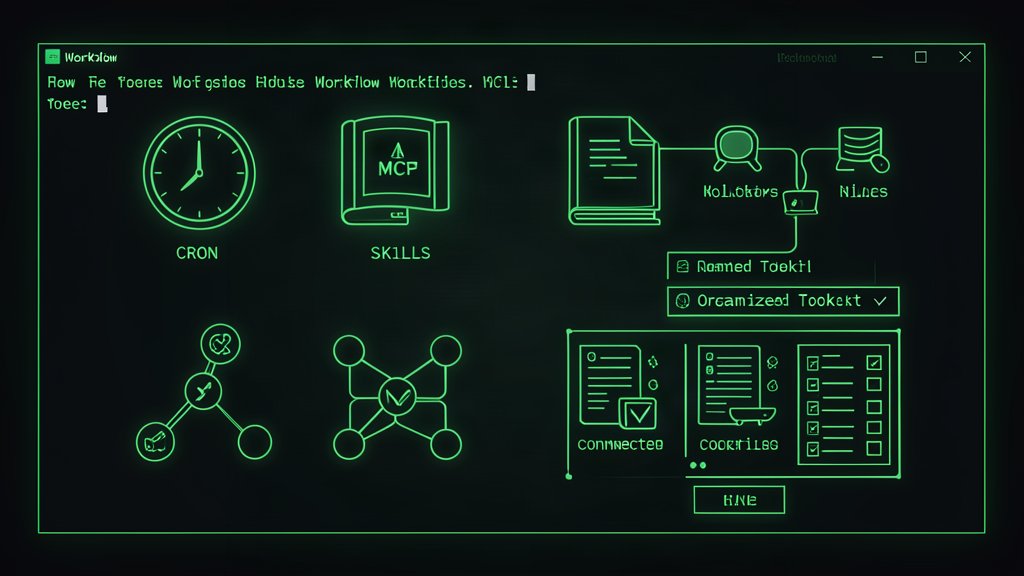
The second useful point is the distinction between a raw model call and the tooling around it. Context windows, system prompts, skills, sub-agents, and MCP are not decorative extras. They are the control plane of the agent. Seeing the stack that way makes it obvious why some teams get useful results while others get brittle, noisy output.
For platform teams, the real lesson is that agents inherit the quality of the environment around them. If the prompt is vague, the task is wide open, and the context is overloaded, the agent becomes hard to trust. If the instructions are narrow, the skills are reusable, and the boundaries are clear, the same model suddenly behaves much better.
That is why this video lands well with infrastructure readers. It maps directly to how good automation already works: define the scope, keep the blast radius small, make the workflow observable, and separate concerns. In that sense, an agent is less like a replacement for engineering and more like a new kind of operator that still needs disciplined systems around it.
The practical takeaway is simple: start with one narrow workflow. Summarise an incident, review a Terraform change, inspect a Kubernetes manifest, or collect facts before a human makes a decision. If that works, turn it into a skill or a sub-agent later. Context management is a real engineering problem, not just a prompt-writing trick.
Official resources: OpenAI engineering guide and Model Context Protocol.
Related areas
Related What I Do
These What I Do pages are matched from the subject matter of this article, creating a cleaner path from educational content to implementation work.
Continue reading
Related articles
Based on shared categories first, then the strongest overlap in tags.