Hermes Agent and workflow tools solve related problems, but they should not be treated as the same category.
A workflow tool like n8n, Zapier, Make, or Pipedream is strongest when the process is already known. A trigger happens, data is transformed, and the result goes somewhere predictable. That is exactly what many business automations need.
Hermes is stronger when the task is less fixed. It fits work that needs interpretation, research, command-line access, web context, project memory, or a human-friendly back-and-forth before action.
The useful question is not which tool replaces the other. The useful question is where each layer belongs.
Where Workflow Tools Win
Workflow tools win when reliability comes from determinism.
If every new lead should create the same CRM record, notify the same channel, and tag the same campaign, a node-based workflow is probably the better choice. It is easier to audit, easier to explain, and easier to test.
That is true for:
- Lead routing.
- Invoice handoffs.
- Simple data syncs.
- Notification flows.
- Fixed approval chains.
When the business process is stable, the automation should be boring.
Where Hermes Wins
Hermes wins when the work does not fit a rigid graph.
If the task begins with “look into this,” “figure out why,” “summarize what changed,” or “check whether this is safe,” an agent can be a better interface. The work may require reading files, searching previous sessions, using the terminal, checking external documentation, and deciding the next step based on what appears.
That is not classic automation. It is delegated investigation and execution.
Hermes is useful for tasks like:
- Reviewing a repo before a change.
- Checking whether a server issue is real.
- Summarizing new feed items with context.
- Running a project-specific validation procedure.
- Turning an unclear request into a concrete plan.
The output is not always an API call. Sometimes the output is a decision, a summary, or a safe next action.
Cron Makes Agent Work Scheduled
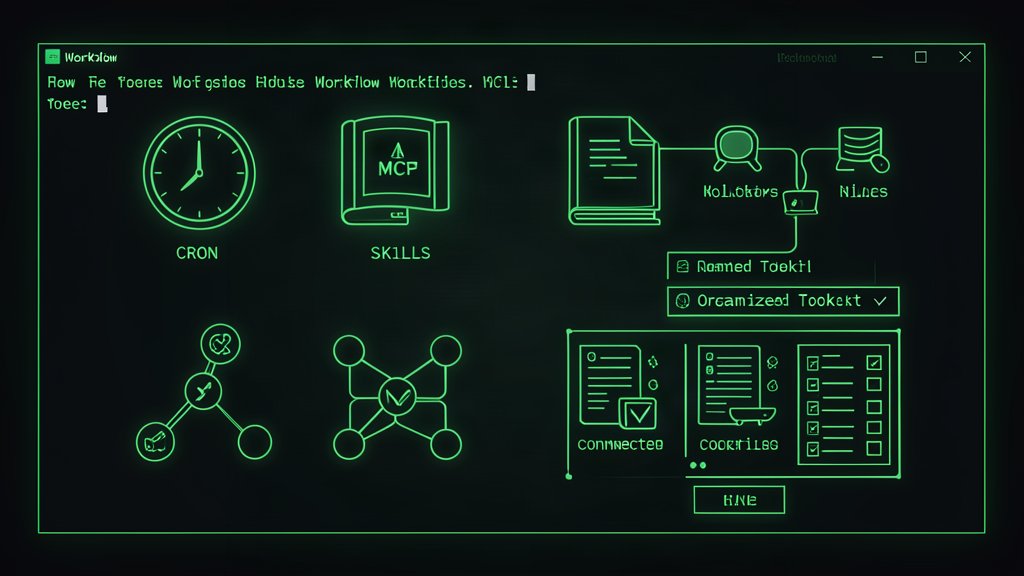
Hermes includes scheduled tasks, which makes it useful for repeated work that still needs reasoning.
A normal cron job is excellent when a script should run exactly the same way every time. Hermes cron is useful when the scheduled task needs an agent layer around it. A job can load skills, run with tools, summarize data, and deliver the result back to a platform like Telegram or another configured channel.
That makes sense for:
- Morning technical briefings.
- Weekly site checks.
- Feed monitoring.
- Lightweight infrastructure audits.
- Human-readable reports from scripts.
The best pattern is often hybrid: script for collection, agent for interpretation.
Skills Make Repeated Work Safer
Skills are one of the reasons Hermes fits recurring technical work.
Instead of hoping the model remembers how a project should be validated, a skill can encode the actual procedure. It can say which commands to run, which files to inspect, which mistakes to avoid, and how to verify the result.
That makes agent work more consistent without forcing every task into a fixed workflow graph.
For example, a website maintenance skill can remind the agent to keep languages aligned, run the lightweight check command, avoid unnecessary production builds, and verify the served page. That is exactly the kind of procedural knowledge that is too specific for a generic model but too flexible for a simple automation node.
MCP Expands the Tool Boundary
MCP is another important part of the decision.
Model Context Protocol lets Hermes connect to external tool servers. That can include GitHub, databases, internal APIs, filesystem tools, browser systems, and other services. Instead of writing a native Hermes tool for everything, MCP gives a standard way to expose capabilities to the agent.
This matters when the agent should operate across systems but still keep tool exposure controlled. You can connect a server, filter the tools, and expose only the actions that make sense.
That is a better fit than giving an agent broad, undefined access to everything.
The Practical Architecture
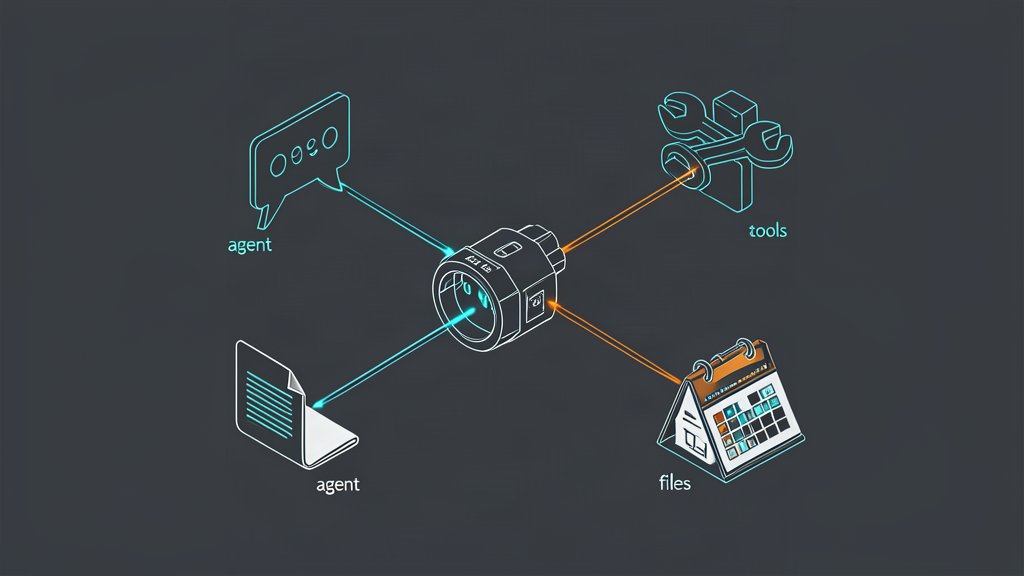
For real operations, the strongest stack is usually layered:
- Workflow tools for deterministic business processes.
- Scripts for repeatable low-level collection or execution.
- Hermes for judgment, context, investigation, and human interaction.
- MCP for exposing external capabilities in a controlled way.
- Skills for preserving the procedures that make agent work reliable.
That gives you flexibility without pretending every action should be autonomous.
Bottom Line
Do not use Hermes as a replacement for every workflow tool.
Use deterministic automation when the process is stable and should run the same way every time. Use Hermes when the task needs context, judgment, memory, tools, or a conversation before action.
The best automation stack usually contains both.
References: Hermes Scheduled Tasks, Hermes MCP documentation, Hermes Skills documentation.
Related areas
Related What I Do
These What I Do pages are matched from the subject matter of this article, creating a cleaner path from educational content to implementation work.
Continue reading
Related articles
Based on shared categories first, then the strongest overlap in tags.