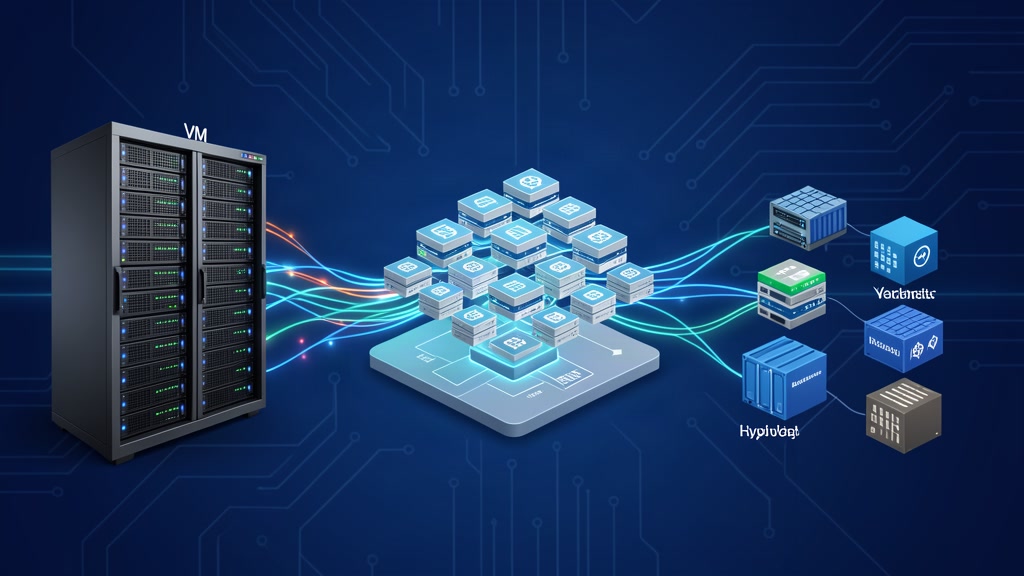
KubeVirt v1.9.0, released on July 30, 2026, makes the VM-container argument more practical. The CNCF Incubating project runs virtual machines through Kubernetes APIs alongside pods, so an existing Windows or Linux guest can stay a VM while new services move to containers. That does not turn a VM into a container. It gives the operations team one scheduling, policy, and observability surface while migration happens at a pace the workload can tolerate.
A minimal resource still looks familiar:
apiVersion: kubevirt.io/v1
kind: VirtualMachine
metadata:
  name: demo
spec:
  runStrategy: Always
  template:
    spec:
      domain:
        resources:
          requests:
            memory: 4Gi
        devices:
          disks:
          - name: rootdisk
            disk: { bus: virtio }
      volumes:
      - name: rootdisk
        containerDisk:
          image: quay.io/kubevirt/cirros-container-disk-demo:latest
Version 1.9 enables all Beta feature gates by default, with opt-out through disabledFeatureGates. The release also adds cross-architecture VM execution as an Alpha feature, zstd-compressed live migration, storage-agnostic incremental backups using Changed Block Tracking, and more hardware-aware placement for GPUs and NUMA resources. Intel TDX, AMD SEV, and IBM Secure Execution do not have identical threat models or hardware requirements, so confidential-computing claims must be checked against the cluster nodes rather than copied from a feature list.
KubeVirt competes with a separate virtualization platform plus Kubernetes, not with a container runtime. The unified API reduces duplicated access policy and cluster tooling, while a dedicated hypervisor stack may still offer deeper storage integrations or a better fit for teams that do not operate Kubernetes. Live migration also depends on shared storage, compatible CPU features, network capacity, and enough spare resources. A migration that passes in a lab can stall during a noisy-neighbor event.
Read the v1.9 feature-gate report before upgrading and pin disabledFeatureGates when an application depends on older behavior. Start with a non-critical VM, test backup and restore, observe migration under load, and keep a rollback path for both the operator and guest workloads. The convergence is useful when it removes duplicated operations, not when it hides virtualization costs.
Related areas
Related What I Do
These What I Do pages are matched from the subject matter of this article, creating a cleaner path from educational content to implementation work.
Continue reading
Related articles
Based on shared categories first, then the strongest overlap in tags.