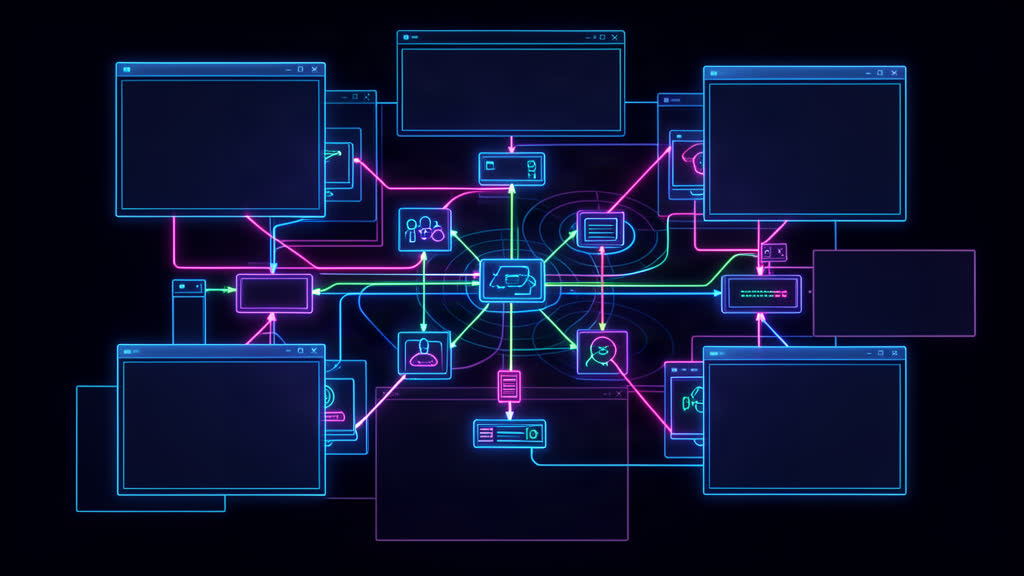
n8n AI agents and automation in 2026: what the complete course covers and why it matters
Business automation has changed significantly over the past year. What used to be rigid, rule-based workflows is becoming adaptive — AI agents that decide which path to take based on context, not just predefined if-else branches. n8n, the open-source workflow automation platform, has been at the centre of this shift.
The complete course released in late 2025 (linked above) covers the full spectrum of what n8n can do in 2026. This post summarises the key takeaways for business owners and technical leads evaluating automation tools.
Why n8n stands out
n8n is different from platforms like Zapier or Make in three important ways:
- Open-source and self-hostable — You control your data and workflows. No vendor lock-in, no per-operation pricing that grows unpredictably.
- AI-native agent support — n8n has built-in nodes for LLM calls, AI agent loops, vector stores, and tool-use patterns. You can build a RAG pipeline or a multi-step AI agent entirely within the workflow editor.
- Granular control — When a low-code node is not enough, you can add custom JavaScript or Python. The platform grows with your team.
What the course covers
The comprehensive n8n course (roughly 6–8 hours of content) is structured around three tiers:
Foundations — Workflow basics, trigger types, data transformation, error handling. How to connect APIs, databases, and SaaS tools without writing glue code.
AI agents — Building agents that can reason, search the web, read documents, and decide which tool to call. The course walks through memory patterns, tool definitions, and how to prevent agent loops.
Production automation — Scheduling, monitoring, handling failures gracefully, and deploying workflows that run unattended. This section is particularly useful for teams that want automation to replace manual processes, not just supplement them.
Practical use cases for small and mid-sized businesses
The strongest parts of the course are the real-world examples:
- Invoice processing — An agent reads incoming PDF invoices, extracts structured data, matches them to purchase orders, and posts them to accounting software. Human review only on exceptions.
- Customer support triage — Incoming emails are classified by intent. Simple requests get auto-replied with relevant documentation. Complex cases are escalated with a full context summary.
- Content publishing pipeline — A workflow monitors a Google Doc for status changes, converts the content to Markdown, uploads images, and publishes to a static site CMS. All triggered by a single spreadsheet column update.
- Data enrichment — CRM contacts are enriched with public data sources, tagged by industry and company size, then synced to a mailing list. Runs weekly with no manual intervention.
Limitations to keep in mind
No tool is perfect. n8n has a learning curve when you move beyond basic workflows — the expression syntax and error-handling patterns take time to internalise. AI agent nodes require understanding of prompt engineering and model selection, which is still an emerging skill.
For teams that already have a Zapier or Make setup doing the job well, migrating may not be worth the effort. n8n is best evaluated alongside a new automation need, not as a rip-and-replace project.
Final thoughts
n8n in 2026 is the closest thing to a universal automation platform for teams that want AI capabilities without giving up control. The complete course linked above is a practical resource for anyone evaluating it, whether you are starting from scratch or looking to extend an existing automated setup.
The full video is embedded above — several hours of structured content with real workflow demonstrations.
Related areas
Related What I Do
These What I Do pages are matched from the subject matter of this article, creating a cleaner path from educational content to implementation work.
Continue reading
Related articles
Based on shared categories first, then the strongest overlap in tags.