pgvector is the practical answer to a simple question: what if you want vector search, but you already trust PostgreSQL?
It is an open-source extension for Postgres that adds vector similarity search to the database you already use for relational data. That means embeddings, metadata, filters, and application data can live together instead of being spread across separate systems.
The Core Idea
pgvector lets you store embeddings in Postgres and query them by similarity.
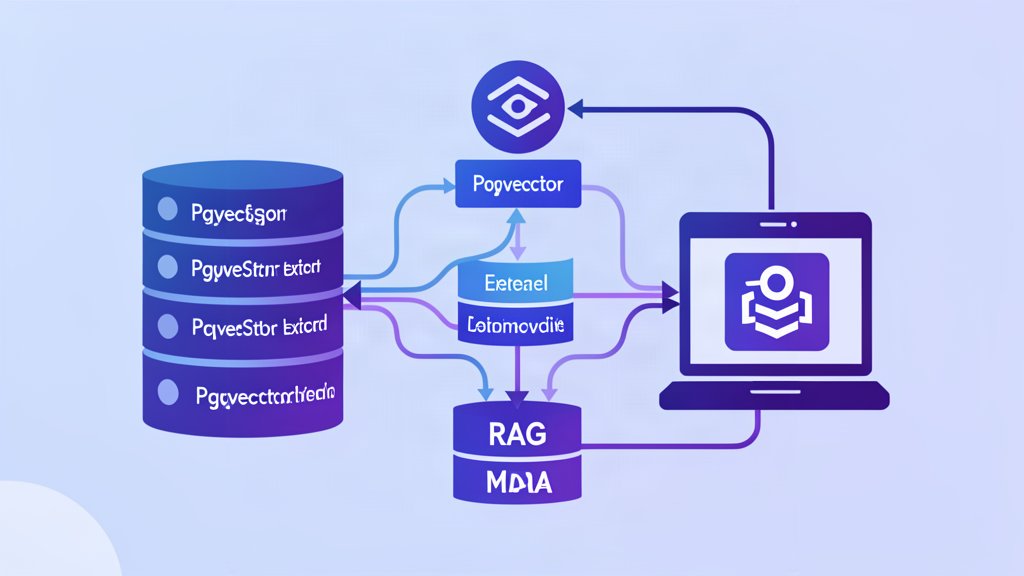
That sounds small, but it changes the architecture in an important way. Instead of sending your RAG data to a separate vector platform, you can keep it next to the rest of the records your application already depends on.
For many teams, that is enough to make the whole system simpler to operate.
What pgvector Gives You
The project supports both exact and approximate nearest-neighbor search.
That matters because you do not always want the same tradeoff. Sometimes you want perfect recall on a smaller dataset. Sometimes you want faster retrieval at larger scale and are willing to tune the index for it.
The official docs also highlight support for:
- HNSW and IVFFlat indexing.
- Multiple distance functions.
- Filtering and hybrid search patterns.
- Half-precision, binary, and sparse vectors.
That is enough to support a serious retrieval system, not just a demo.
When It Makes Sense
pgvector is especially useful when:
- Your application already runs on PostgreSQL.
- You want RAG without introducing another major data system.
- You need joins, filters, and transactional data around the embeddings.
- You want a lower-ops path to semantic search.
It is a strong fit for internal search, knowledge bases, support assistants, and product features where retrieval is important but not the entire business.
Why It Fits Consulting Work
From a consulting perspective, pgvector is attractive because it keeps the system understandable.
A team can usually reason about one database, one backup story, one security model, and one place for data governance. That reduces the number of moving parts before the AI logic even starts.
It also makes it easier to explain the architecture to non-specialists. A client does not need to understand a separate vector platform before they can understand the retrieval layer.
What To Watch Out For
pgvector is not automatically the right answer for every workload.
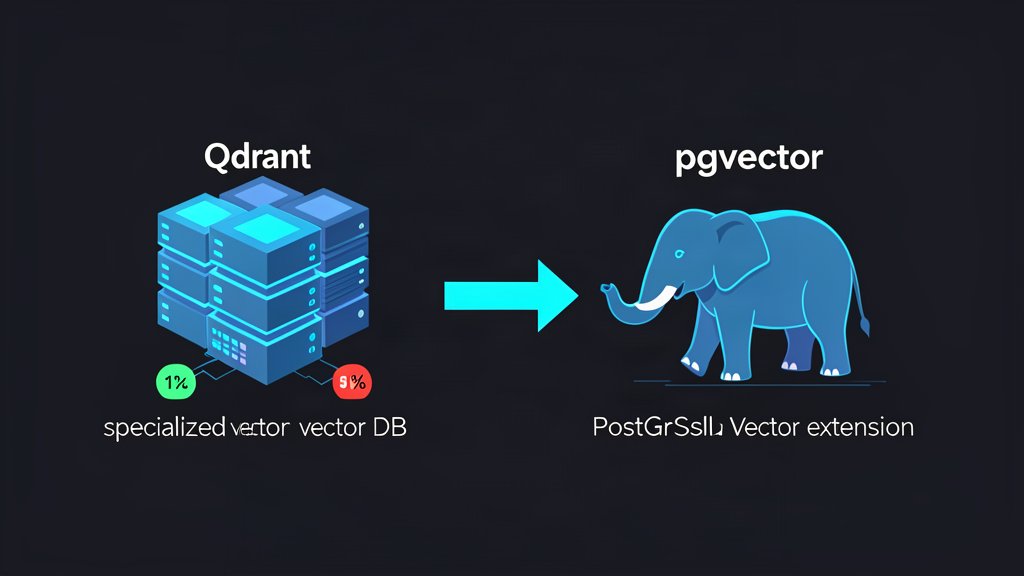
If the retrieval layer becomes the main product, or if you need very specialized vector infrastructure from day one, a dedicated vector database may be a better fit. The point is not to choose the smallest tool. The point is to choose the simplest tool that will still hold up.
That is usually a data and operations question, not a hype question.
Bottom Line
Use pgvector when you want vector search inside PostgreSQL and you care about keeping the RAG stack close to the rest of your application data.
For many teams, that is the cleanest way to move from keyword search to semantic retrieval without creating a separate platform to maintain.
Reference: pgvector README.
Related areas
Related What I Do
These What I Do pages are matched from the subject matter of this article, creating a cleaner path from educational content to implementation work.
Continue reading
Related articles
Based on shared categories first, then the strongest overlap in tags.