Human-in-the-loop systems are architecture, not a checkbox
Human-in-the-loop AI works only when the review point is designed into the workflow state, risk model, audit trail, and recovery path.
Category
28 matching blog articles. Articles on agent workflows, model integration, retrieval design, and production AI constraints.
Category wiki
Definition
Practical AI implementation notes for systems that must be reliable, observable, and useful in production.
What belongs here
Articles land in AI when the main subject is applied AI patterns including agents, retrieval, evaluation, and production system design..
How to read it
Treat this category as the broad lane first, then use tags to narrow that subject down to the concrete technologies, platforms, or patterns used inside it.
Common tags in this category
Human-in-the-loop AI works only when the review point is designed into the workflow state, risk model, audit trail, and recovery path.
Hermes is not a replacement for deterministic workflow tools, but it is a strong layer for flexible tasks that need judgment, tools, memory, and scheduled execution.
Hermes Agent stands out because it treats memory, skills, and session recall as core infrastructure for personal AI agents, not optional extras.
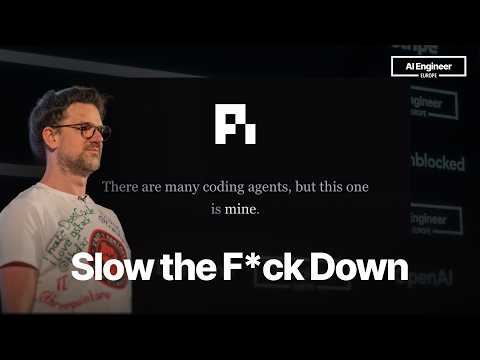
A useful talk from Mario Zechner about building Pi with a stronger product philosophy in a market full of shallow AI tooling and repetitive agent hype.

A useful video overview of the Pi coding agent and why its extensible, terminal-first approach stands apart from more closed coding-agent tools.
Pi's model catalog is useful because it makes provider choice, context limits, and price tradeoffs visible before developers commit to one coding-agent workflow.
Pi positions itself as a minimal terminal coding harness, and that focus matters for developers who want agent tooling to fit their workflow instead of replacing it.
pgvector and Qdrant both support embeddings, but they fit different operating models for product search and retrieval.
Why Richard Sutton — a father of reinforcement learning — calls current LLMs a 'dead end', and what that means for researchers and practitioners.
OpenClaw works best when channels, memory, and guardrails are planned as part of the workflow, not added after the first prototype.
LangChain, LangGraph, and LangSmith solve different problems, and the stack is clearer when each layer has a specific job.
LangGraph is built for long-running, stateful agent workflows where durable execution, human review, and controlled resumption matter.
A practical production checklist for LangChain apps that need tracing, evaluation, integration boundaries, and a realistic path to deployment.
LangChain, LangGraph, and LangSmith solve different problems in the same ecosystem: application building, orchestration, and observability.
Qdrant multitenancy and collection aliases make it easier to serve multiple users and switch retrieval indexes safely in production RAG systems.
LangChain is a fast way to build custom LLM applications and agents, especially when you want a practical starting point instead of a blank orchestration layer.
A practical comparison between keeping vectors in PostgreSQL with pgvector and moving retrieval into Qdrant.
A practical Qdrant RAG architecture using dense vectors, sparse vectors, prefetch, and multi-stage search.
Qdrant is an AI-native vector search engine for teams that need semantic retrieval, multitenancy, and flexible vector layouts.
RAG systems become useful when you evaluate retrieval quality, defend against prompt injection, and inspect traces with LangSmith.
A practical RAG architecture using PostgreSQL, pgvector, embeddings, and a model that answers from retrieved context.
pgvector adds vector search to PostgreSQL and is a strong fit when you want retrieval close to your existing data.
How to decide which OpenClaw channel, model, and trust boundary setup fits personal assistants, team assistants, and more sensitive workflows.
A practical security checklist for OpenClaw deployments, including allowlists, sandboxing, reverse proxies, secrets, and trust boundaries.
A practical guide to installing OpenClaw, running onboarding, and choosing a deployment model that matches your privacy and availability needs.
OpenClaw and tools like n8n or Zapier solve related but different problems: OpenClaw is agentic and chat-first, while workflow tools are deterministic and trigger-driven.
OpenClaw combines a gateway, persistent memory, chat channels, and skills so the assistant can accept requests and act on them over time.
OpenClaw is a chat-first, open-source AI agent platform that runs on your machine and can execute real tasks instead of only generating text.