A lot of AI projects become confusing because teams use one library for everything.
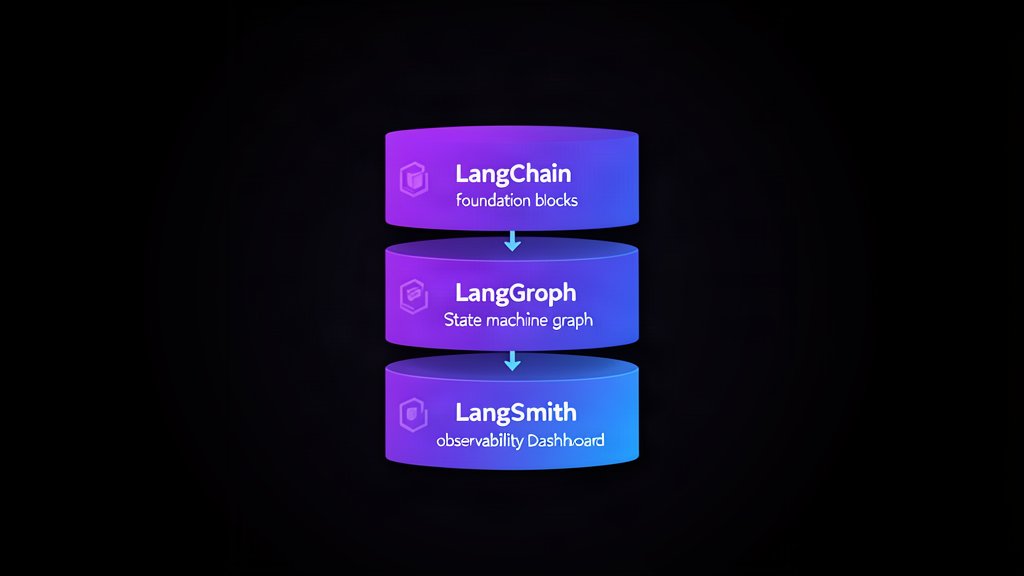
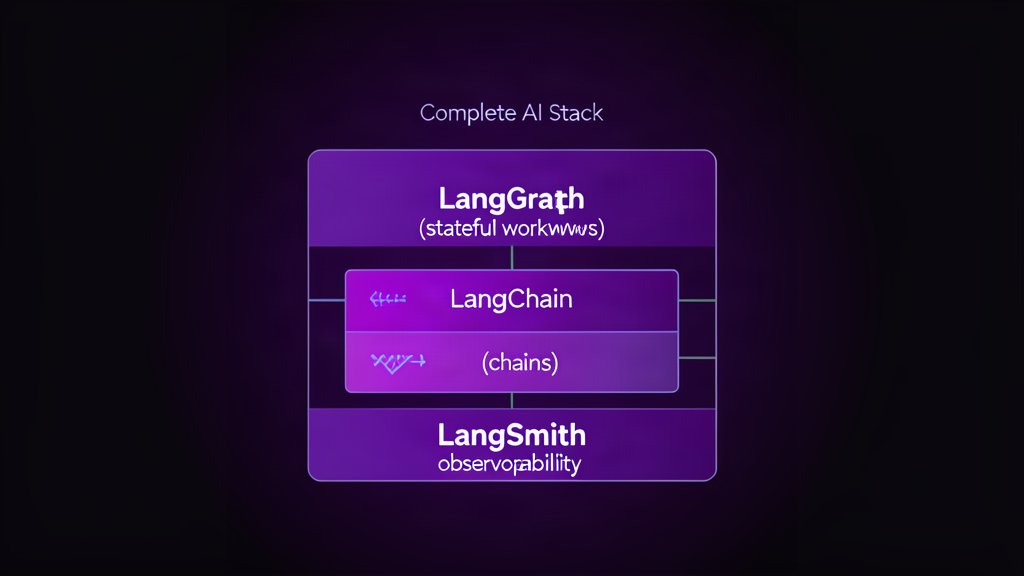
LangChain, LangGraph, and LangSmith are stronger when they are treated as three different layers instead of one blended toolset. LangChain gives you building blocks. LangGraph gives you stateful flow control. LangSmith gives you visibility into what the system did.
Keep The Roles Separate
Use LangChain for the pieces that need to connect to models, prompts, tools, and retrieval components. Use LangGraph when the workflow must remember where it is, branch, or revisit a step. Use LangSmith when you need to inspect the run, compare outputs, and debug the result.
That separation keeps the architecture easier to maintain.
The current LangGraph docs describe durable execution, human-in-the-loop control, comprehensive memory, and production-oriented orchestration. That makes the stack especially useful when the workflow is not a single prompt, but a system with state, retries, and checkpoints.
LangChain stays useful for model and tool composition, while LangGraph becomes the layer that decides what happens next. LangSmith then provides traces, evaluations, and deployment visibility so the team can see the difference between a good output and a reliable system.
Where The Stack Gets Stronger
Once you add PostgreSQL, pgvector, or Qdrant, the retrieval layer becomes part of the system design instead of an afterthought. That is usually the point where LangGraph helps the most, because state and control matter more than a simple prompt chain.
That is also where LangSmith matters more than most teams expect. A retrieval system can look fine in a one-off test and still behave poorly in production. Tracing gives you the run history, while evaluations let you compare prompt changes, retriever changes, and tool changes in a repeatable way.
If the project needs human review, LangGraph is the safer orchestration layer because it can pause, branch, and resume. That is useful for approvals, escalations, and workflows that should not be fully autonomous.
A Clean Mental Model
Think of the stack like this:
- LangChain builds the parts.
- LangGraph coordinates the run.
- LangSmith shows what happened.
That model keeps the conversation with the client much simpler. It also makes it easier to decide which issue belongs to architecture, which one belongs to prompting, and which one belongs to evaluation.
Practical Rule
If a project only needs one call and one answer, do not overbuild it. If it needs branching, memory, or reviewability, this stack starts to make sense very quickly.
Related areas
Related What I Do
These What I Do pages are matched from the subject matter of this article, creating a cleaner path from educational content to implementation work.
Continue reading
Related articles
Based on shared categories first, then the strongest overlap in tags.