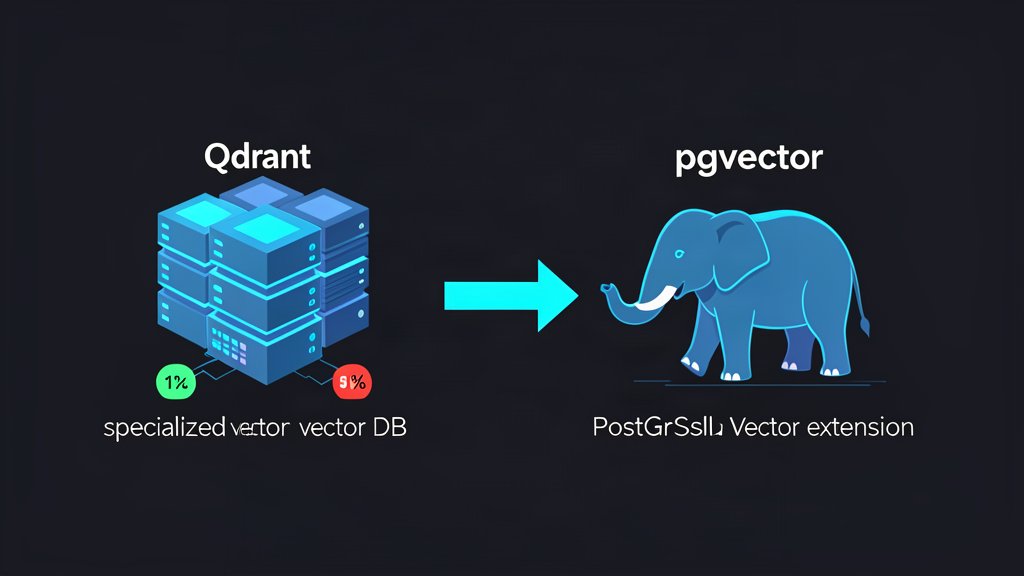
The Qdrant versus pgvector question is really a question about operating model.
Both can support serious RAG systems. Both can store and search embeddings. The difference is where you want the retrieval layer to live and how much specialization you need.
When pgvector Is The Better Choice
pgvector is often the cleaner choice when your application already depends on PostgreSQL.
It works well when you want:
- One database instead of two.
- Closely coupled business data and embeddings.
- Joins, filters, and transactional behavior in one place.
- A lower-ops path for an internal search or assistant feature.
If retrieval is part of a broader application, pgvector keeps things simple.
When Qdrant Is The Better Choice
Qdrant becomes more attractive when retrieval needs its own identity.
It is a good fit when you want:
- A dedicated vector search platform.
- Hybrid dense-plus-sparse retrieval.
- Multi-stage search and query fusion.
- Collection aliases for safe switching.
- Multitenancy patterns that are clearer in a retrieval-specific system.
That is usually the right move when semantic search is not just a feature, but a major workload.
The Real Tradeoff
The tradeoff is simplicity versus specialization.
pgvector keeps the vector layer inside a database you already know. Qdrant gives you a more retrieval-native architecture with richer search primitives.
Neither is automatically better. The better choice depends on whether you are building a feature or a platform.
A Useful Decision Rule
Here is the rule of thumb I use:
- Start with pgvector if PostgreSQL is already the source of truth and retrieval is just one part of the app.
- Start with Qdrant if retrieval needs to scale and evolve independently.
- Prefer Qdrant if you need hybrid search patterns from the start.
- Prefer pgvector if the main win is keeping the stack compact.
That usually gets teams to a practical answer faster than debating abstract architecture.
Why This Matters In Consulting
Clients usually do not need a perfect vector strategy on day one.
They need a retrieval layer that is understandable, maintainable, and aligned with the rest of the system. That means the right answer is often the one that reduces unnecessary complexity while still leaving room to grow.
Sometimes that is pgvector. Sometimes that is Qdrant. The job is to choose based on the actual system shape.
Bottom Line
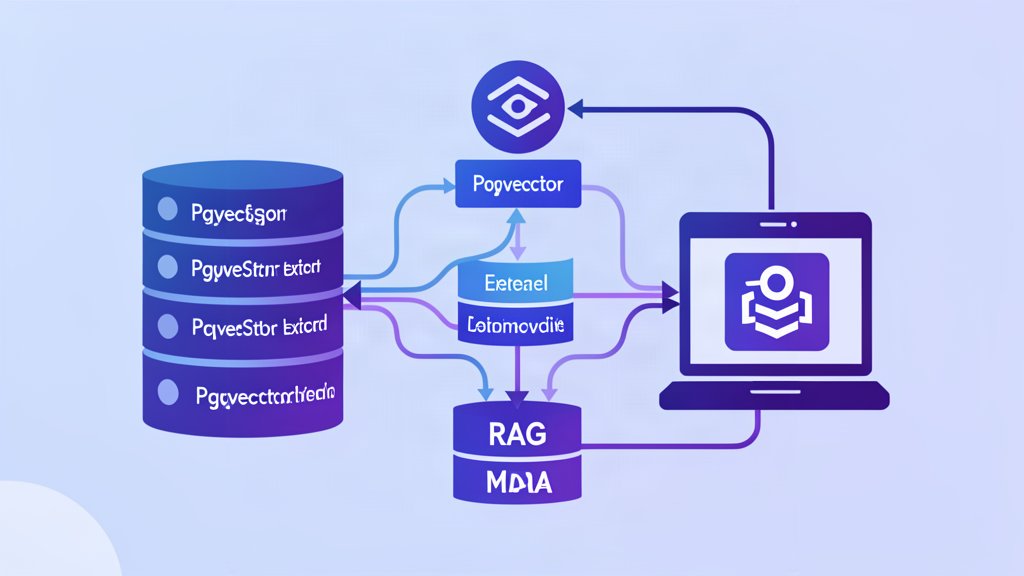
Choose pgvector when you want retrieval close to PostgreSQL and the rest of your application data.
Choose Qdrant when you want a dedicated retrieval platform with hybrid search, collection management, and more room to specialize.
Reference: pgvector README and Qdrant Documentation.
Related areas
Related What I Do
These What I Do pages are matched from the subject matter of this article, creating a cleaner path from educational content to implementation work.
Continue reading
Related articles
Based on shared categories first, then the strongest overlap in tags.