A good RAG system is not a prompt trick. It is an indexing and retrieval system with a model attached to it.
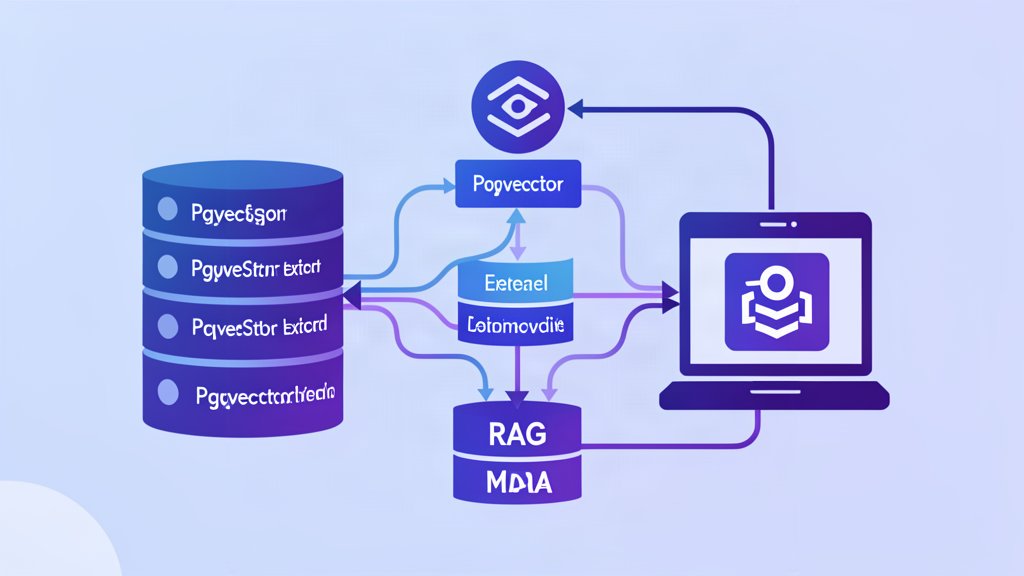
If you build it on PostgreSQL and pgvector, the basic architecture becomes very understandable: ingest source material, split it into chunks, create embeddings, store them with metadata, retrieve the best matches, and pass that context into the model.
The Basic Flow
The LangChain RAG docs describe the core split very clearly: indexing happens ahead of time, then retrieval and generation happen at runtime.
That distinction matters because it keeps the expensive work out of the user request path. You do not want to load, chunk, and embed documents every time someone asks a question.
A practical pipeline looks like this:
- Collect authoritative source data.
- Chunk the content into retrieval-friendly pieces.
- Generate embeddings for each chunk.
- Store the vectors and metadata in PostgreSQL with pgvector.
- Retrieve the most relevant chunks for the user query.
- Feed the retrieved context to the model.
Why This Stack Works
This stack works because each layer does one job.
PostgreSQL handles the relational data, metadata, filtering, and persistence. pgvector handles semantic similarity search. The application layer handles prompting, orchestration, and user experience.
That separation is simple enough to maintain, but flexible enough to grow.
It also fits the way real business systems work. Most RAG projects are not just text search. They need document status, tenant filtering, permissions, auditability, and a path to update content when the source changes.
Implementation Notes That Matter
The quality of the retrieval layer depends on the quality of the ingestion layer.
That means you need to pay attention to:
- Chunk size and overlap.
- Metadata quality.
- Which embedding model you use.
- Whether you need exact search or approximate search.
- How you filter results before they reach the model.
If the chunks are too large, retrieval becomes blunt. If they are too small, the model loses context. If metadata is weak, filtering becomes messy. If you do not measure retrieval quality, you end up guessing.
What Good Retrieval Looks Like
Good retrieval is not just “top 5 nearest neighbors.”
It is the combination of the right chunks, the right filters, and a prompt that tells the model to treat retrieved content as data, not instructions.
That is also where hybrid retrieval can help. If your users search with internal names, abbreviations, or exact product terms, keyword-style filtering can complement semantic similarity instead of competing with it.
Where The Human Work Still Is
RAG does not remove the need for judgment.
You still need to decide what content is authoritative, how often it changes, how you evaluate answers, and what the system should do when retrieval comes back weak or empty.
That is why I like PostgreSQL and pgvector for practical deployments. They keep the system close enough to the data that it is easier to reason about the tradeoffs.
Bottom Line
A PostgreSQL + pgvector RAG pipeline is often the most practical starting point for teams that want semantic retrieval without building a separate platform around it.
The architecture stays compact, the data model stays familiar, and the retrieval layer remains connected to the rest of the business system.
Reference: pgvector README and LangChain RAG tutorial.
Related areas
Related What I Do
These What I Do pages are matched from the subject matter of this article, creating a cleaner path from educational content to implementation work.
Continue reading
Related articles
Based on shared categories first, then the strongest overlap in tags.