A good Qdrant RAG system starts with a simple idea: store retrievable content once, then combine the right search modes at query time.
That is why Qdrant is interesting for real projects. It does not force you into only one search strategy. You can use dense vectors for semantic similarity, sparse vectors for exact term matching, and hybrid queries when you need the best of both.
The Basic Architecture
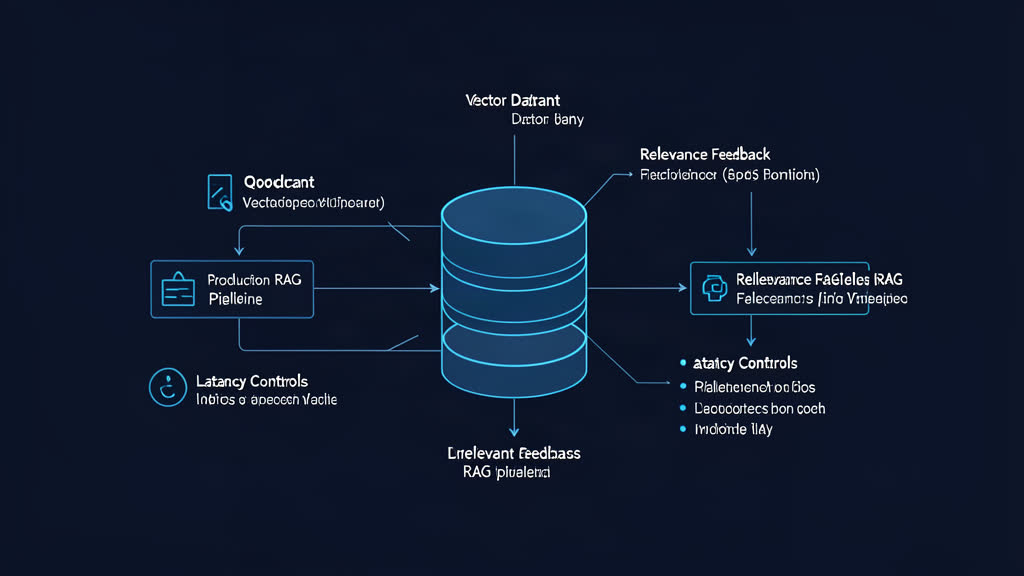
A practical RAG pipeline usually looks like this:
- Load authoritative source content.
- Split the content into chunks.
- Generate embeddings.
- Store dense vectors and metadata in Qdrant.
- Add sparse vectors if keyword precision matters.
- Retrieve with a hybrid query.
- Send the retrieved context to the model.
That last step still matters, because the model only becomes reliable when the retrieved context is good.
Why Hybrid Search Matters
Qdrant’s hybrid search is useful when users do not search the same way your embedding model understands language.
Semantic search is good at meaning. Sparse search is good at exact terms, names, abbreviations, and technical labels. Real business queries often need both.
Qdrant’s docs highlight result fusion approaches like RRF and DBSF, which are useful when you want to combine multiple prefetches into a single ranking.
That means you can blend:
- Dense retrieval for meaning.
- Sparse retrieval for literal terms.
- Re-ranking or fusion for a cleaner final result.
Why Prefetch Is Important
Qdrant’s Query API uses prefetch to make multi-stage search possible.
That matters because you can first gather candidate results and then refine them with a second pass. This is useful when you want to balance speed and accuracy, or when a cheaper representation can narrow the field before a more expensive pass re-scores the results.
In practice, that gives you room to tune search rather than treating retrieval as a single fixed query.
Collection Design Notes
Collection design is part of the architecture.
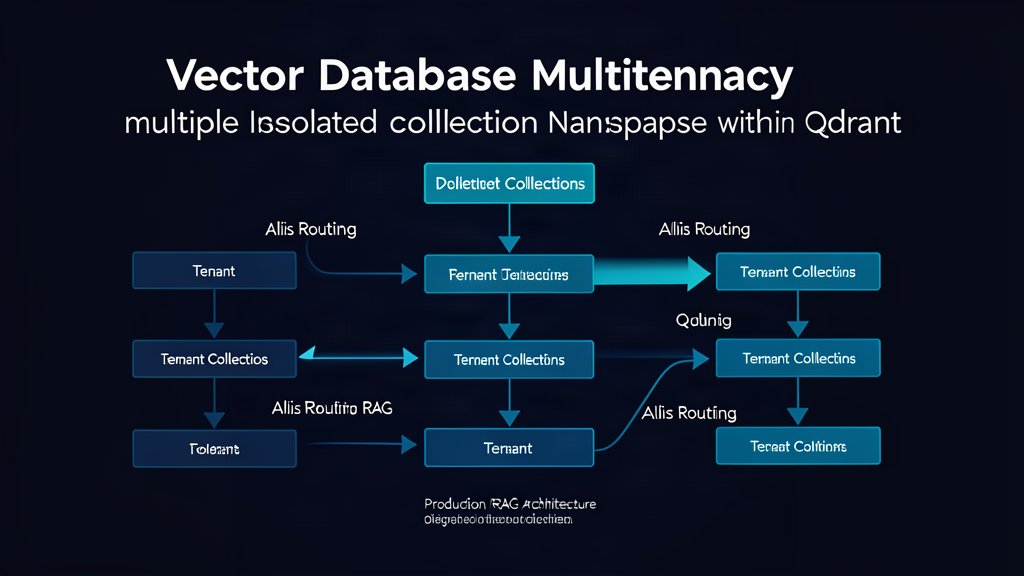
Qdrant supports named vectors, sparse vectors, collection metadata, and aliases. That means you can model different content types or different retrieval strategies without flattening everything into one generic representation.
A few practical habits help here:
- Keep collection structure simple at first.
- Use payloads for filtering and tenant separation.
- Add sparse vectors only where keyword recall matters.
- Use aliases when you need to switch collections safely.
What Good RAG Looks Like
Good RAG is not just “return top results.”
It is the combination of the right chunking, the right vector layout, the right fusion strategy, and a prompt that tells the model to treat context as data.
If the retrieval step is weak, the answer will be weak. If the retrieval step is good, the model has a much better chance of producing something useful and grounded.
Bottom Line
Qdrant is a strong fit for RAG systems that need dense and sparse retrieval, multi-stage search, and a dedicated vector layer that can grow with the product.
If you want retrieval to behave more like a real system than a prototype trick, Qdrant gives you the right primitives.
Reference: Qdrant Hybrid and Multi-Stage Queries and Qdrant Collections.
Related areas
Related What I Do
These What I Do pages are matched from the subject matter of this article, creating a cleaner path from educational content to implementation work.
Continue reading
Related articles
Based on shared categories first, then the strongest overlap in tags.