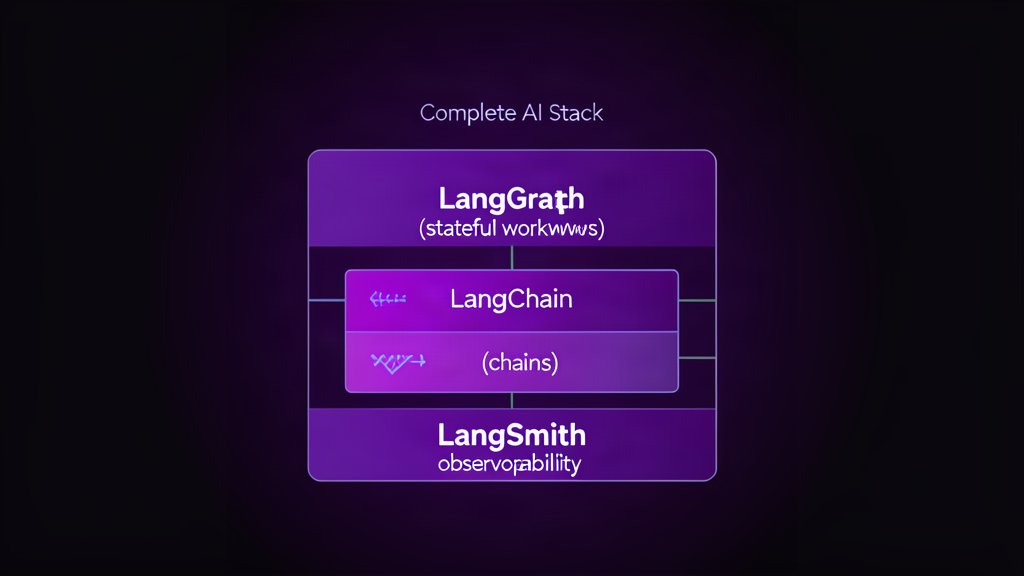
LangGraph solves a different problem than LangChain.
Where LangChain helps you build the application or agent quickly, LangGraph is the layer for long-running, stateful workflows that need durable execution, human-in-the-loop control, and a reliable way to resume after interruptions.
That is why it matters for production AI systems. Most business workflows are not one-shot prompts. They are processes that pause, wait, branch, retry, and sometimes need human approval before continuing.
The Core Idea
LangGraph is an orchestration framework and runtime.
It does not try to hide the fact that agent systems are stateful and operationally messy. Instead, it gives you a way to model that mess explicitly so your workflow can survive failures and continue from the last checkpoint instead of starting over.
That is the real value proposition: not just smart outputs, but recoverable execution.
Why Durable Execution Matters
If a workflow runs for more than a few seconds, durable execution stops being a nice-to-have.
The LangGraph docs describe durable execution as saving progress at key points so a process can pause and later resume where it left off. That matters when:
- A human needs to review a decision.
- An API call fails temporarily.
- A workflow spans multiple steps or branches.
- You cannot afford to redo work after an interruption.
For production systems, this is the difference between a demo and a dependable process.
Interrupts Are The Practical Superpower
One of the most useful LangGraph features is interrupt().
It lets a graph pause, surface a question or review point, and wait for external input before continuing. That makes it ideal for approval workflows, editing loops, and validation steps where the machine should not blindly continue.
Examples include:
- Approving a sensitive API call.
- Reviewing generated content before sending it.
- Confirming a human decision in the middle of a workflow.
- Editing state before the next step runs.
That is much more useful than pretending every AI action should be autonomous.
Why Side Effects Need Discipline
LangGraph’s docs are explicit that durable workflows must be deterministic and idempotent where possible.
That matters because the system may replay nodes after a pause or failure. If you write files, call APIs, or mutate records before an interrupt, you can accidentally repeat that side effect when the workflow resumes.
So the discipline is simple:
- Keep side effects idempotent.
- Put risky actions after the approval point.
- Use tasks or node boundaries to isolate repeated work.
That is production thinking, not prototype thinking.
When LangGraph Is The Right Choice
Use LangGraph when the workflow needs one or more of these:
- Durable state across interruptions.
- Human approvals or review steps.
- Long-running execution.
- Branching logic that must stay understandable.
- Replayable behavior after failure.
If the workflow is just a simple request-response loop, LangChain may be enough. If the workflow is operational and stateful, LangGraph usually becomes the better layer.
Production Benefits
LangGraph is useful because it gives teams a clearer way to build systems they can actually maintain.
You can pause, inspect, resume, and reason about state instead of relying on a hidden chain of prompts and tool calls. That makes it easier to debug complex agent behavior and easier to explain the workflow to a client or team member.
It also fits naturally with observability tools like LangSmith, which the docs recommend for tracing and debugging.
Bottom Line
Use LangGraph when your AI workflow needs to behave like a real process, not just a chat loop.
If you need durable execution, interrupts, checkpoints, human review, and controlled resumption, LangGraph is the right layer.
Reference: LangGraph overview, Interrupts, and Durable execution.
Related areas
Related What I Do
These What I Do pages are matched from the subject matter of this article, creating a cleaner path from educational content to implementation work.
Continue reading
Related articles
Based on shared categories first, then the strongest overlap in tags.