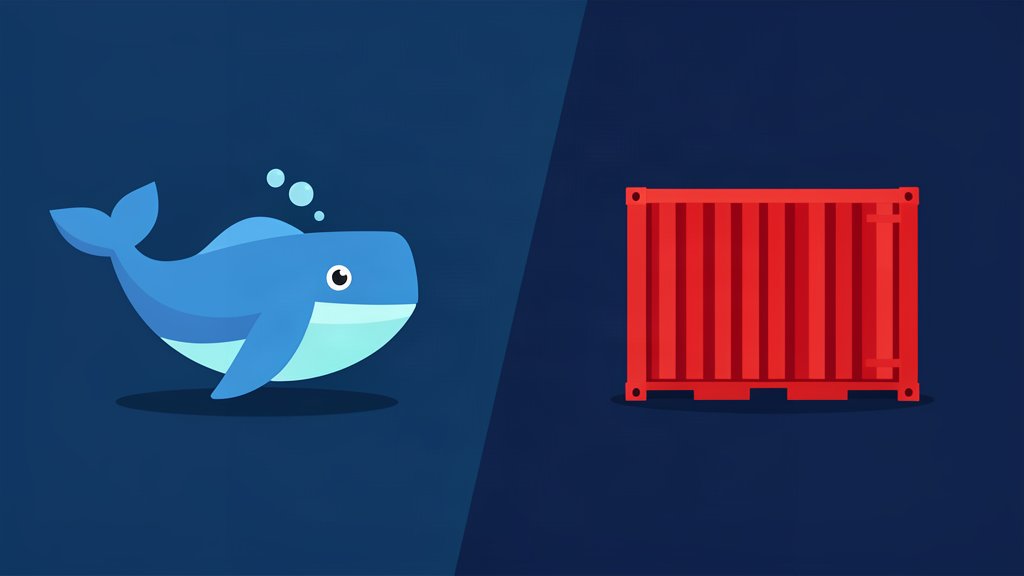
The Docker versus Podman discussion is often noisier than it needs to be.
Most teams do not need a philosophical winner. They need to know which differences affect real development and operations work.
That matters even more in 2026 because Docker and Podman are not positioning themselves in exactly the same way anymore. Podman is still speaking the language of daemonless, rootless, Linux-native container tooling. Docker is increasingly presenting a broader developer platform around Docker Desktop, Docker Hub, hardened images, supply chain security, and even MCP-related workflows.
The Daemon Model Is the First Real Difference
Docker traditionally centers around a daemon-managed runtime model. Podman is daemonless.
That distinction matters because it changes how the runtime is controlled, how some security boundaries are understood, and how closely the tool matches standard Linux process behavior.
If your team is comfortable with a central engine and likes the surrounding Docker ecosystem, that model is not a problem. If the team prefers fewer background moving parts and more direct process control, Podman becomes more attractive.
Docker’s own overview docs still explain the platform through its client-server architecture and dockerd. Podman docs still define Podman as daemonless. That is the first difference to understand because it shapes all the others.
Rootless Workflows Usually Matter More Than CLI Similarity
People often start by asking whether the commands feel similar. That is useful, but it is not the most important question.
The more important question is whether your team wants rootless containers to be a first-class operational habit. Podman is especially strong there.
For Linux-heavy environments, that can make Podman feel more natural and easier to defend from a least-privilege perspective.
CLI familiarity still matters, and Podman remains intentionally close enough that many Docker-shaped commands and habits translate well. But similarity at the command layer is not the real architectural decision.
Ecosystem Habit Still Favors Docker in Many Teams
Docker remains deeply embedded in tutorials, examples, third-party tooling, CI habits, and team muscle memory.
That ecosystem weight is real. Even when Podman can perform the same basic job, the surrounding assumptions may still be Docker-shaped. That means the best technical runtime does not always win if the broader workflow cost is too high.
On top of that, Docker is now packaging more value above the runtime layer itself: Docker Desktop, Docker Hub, Docker Hardened Images, Docker Scout, Build Cloud, and an increasingly explicit secure-software-supply-chain story. That broader platform is part of why many teams stay with Docker even when Podman is technically attractive.
This is why the practical question is not only “Can Podman do it?” but also “How much friction do we add to the team if we switch?”
Podman Often Fits Better on Linux-First, Self-Managed Systems
Podman tends to fit especially well when the team is:
- operating directly on Linux servers,
- using systemd as part of normal service management,
- prioritizing rootless execution,
- trying to keep the container runtime model simple.
Docker often fits better when the team is:
- heavily invested in Docker-based workflows already,
- depending on Docker-specific tooling expectations,
- optimizing for familiarity across developers and CI systems.
It also fits better when the team wants the whole Docker product surface rather than only a container engine.
The Real Answer Is Usually Operational, Not Ideological
In practice, Docker and Podman both work. The better choice usually depends on what the team wants the runtime layer to feel like.
If you want the broadest default ecosystem and the most familiar container workflow, Docker is still the easier default for many teams. If you want daemonless operation, stronger rootless habits, tighter Linux-native behavior, and a more runtime-focused tool, Podman is often the better fit.
Bottom Line
The difference between Docker and Podman matters when your team cares about runtime model, privilege boundaries, ecosystem expectations, and operational fit. Choose the one that matches how your team already works or wants to work, not the one that wins the loudest online argument.
References: Docker, Podman, and Podman Documentation.
Related areas
Related What I Do
These What I Do pages are matched from the subject matter of this article, creating a cleaner path from educational content to implementation work.
Continue reading
Related articles
Based on shared categories first, then the strongest overlap in tags.