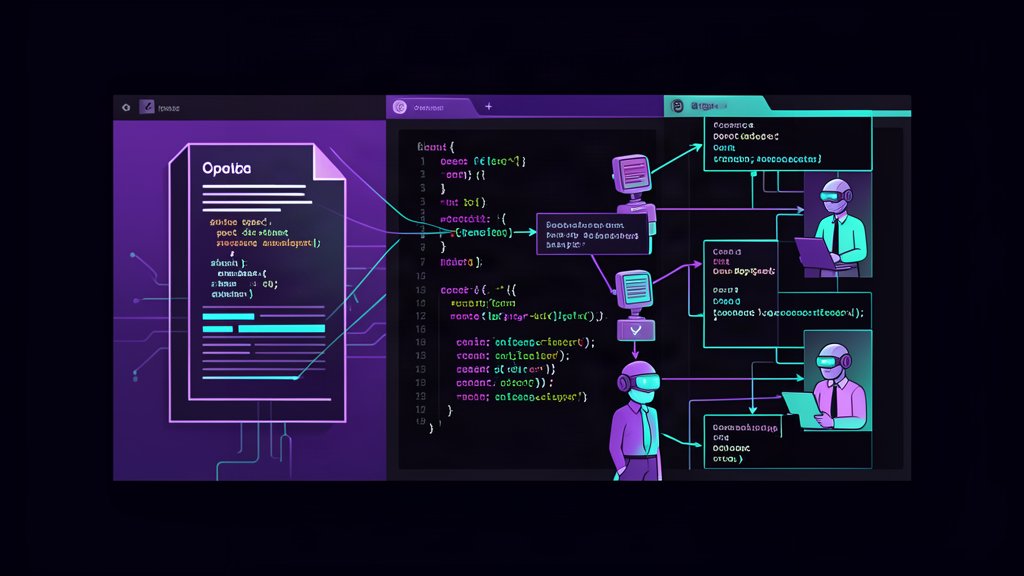
The expensive part of an AI coding system is not necessarily the model. It is the work that happens before and after a model call: deciding what is ready, assigning the right task, catching a bad change, and proving that the result runs. A premium coding agent can make one developer more effective; a coding factory turns a stream of well-scoped work into reviewed, verifiable deliverables. My view is that this operating system—not access to another model—is the binding constraint on shipping more with less human input.
A factory is a delivery pipeline, not a swarm
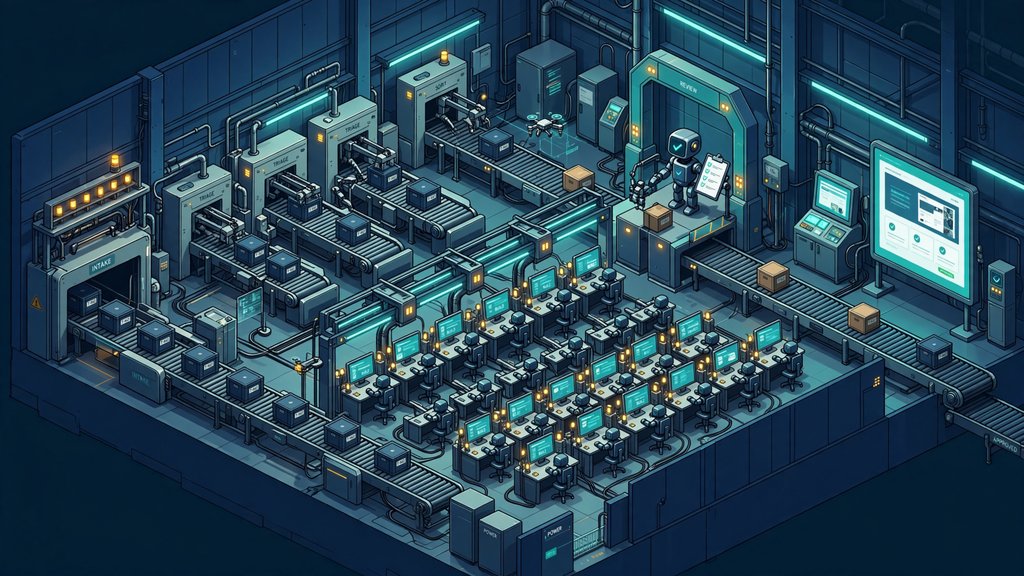
A useful factory starts with intake: requests are captured with an owner, context, constraints, and a definition of done. Triage rejects ambiguity or risk that is not ready for automation. Decomposition turns accepted work into small, independent cards with explicit inputs and acceptance checks. Execution routes routine research, edits, tests, and documentation to appropriate agents and models. Reviewer gates inspect diffs and claims; a preview or test environment then verifies the integrated result before it is called shipped.
The goal is not to remove human judgment. It is to reserve it for decisions that need it. People set priorities, resolve consequential ambiguity, approve risky actions, and decide whether a result is good enough. Agents can do much of the bounded production work between those points. In my observed practice, keeping tasks small and requiring concrete evidence at handoff matters more than maximizing the number of agents running at once.
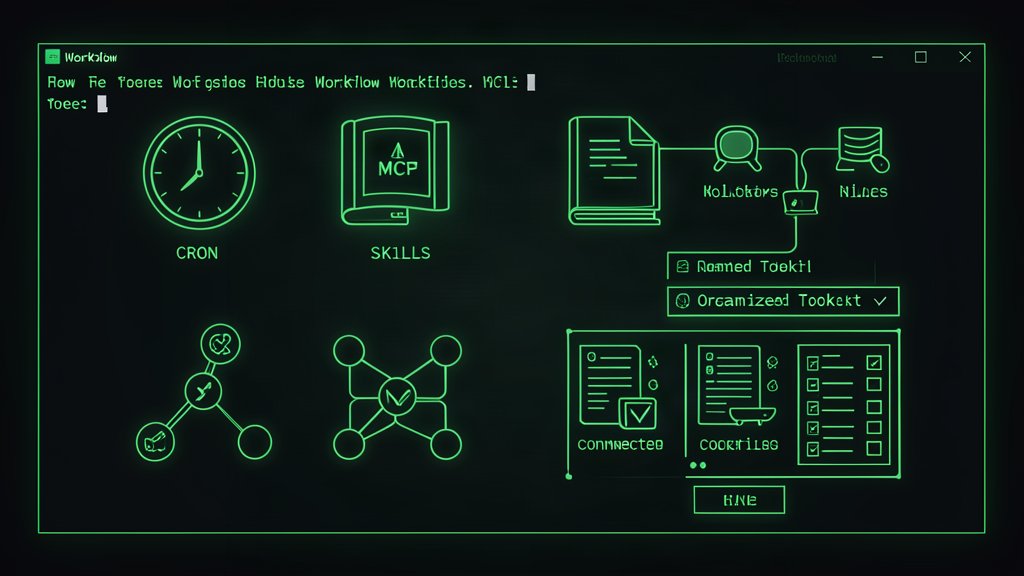
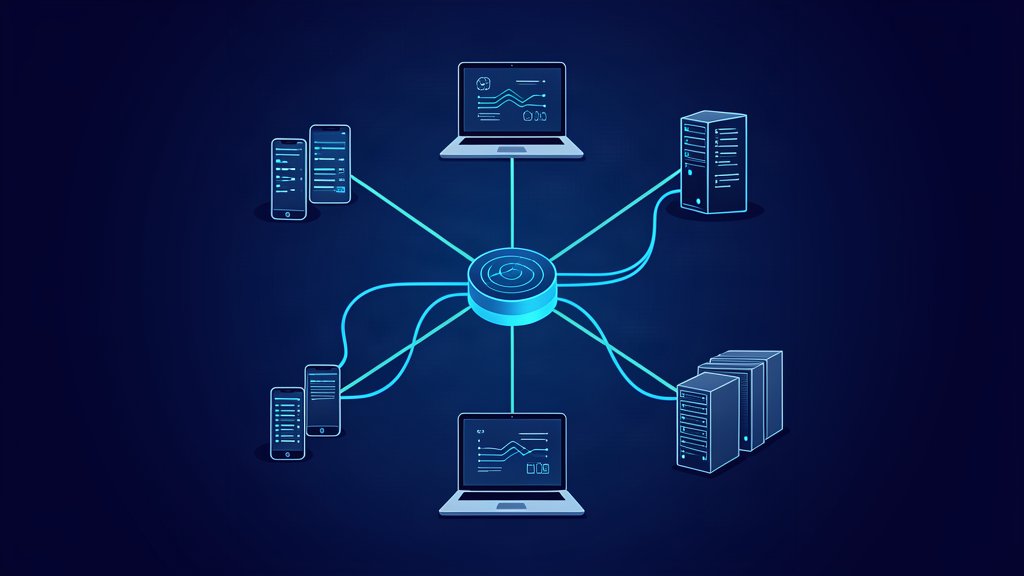
Hermes is a self-hosted agent runtime: profiles separate roles and configuration, fleets let work be distributed, and kanban orchestration connects intake, dependencies, and handoffs. It is not a turnkey coding IDE or a guarantee of autonomous delivery. The factory still needs repository access rules, task discipline, tests, review, and an operator who can diagnose failures.
How paid coding tools fit
Paid agents are genuinely useful when a developer needs a capable, polished interface without first assembling the surrounding system. Claude Code offers terminal, IDE, desktop, and web workflows; its commercial plans include the agent, while platform use can be billed through the API (Anthropic pricing, Claude Code overview). OpenAI Codex spans a subscription-based product and API-key use; the latter has separate API pricing and does not include the same cloud integrations (Codex pricing, Codex CLI). These are strong choices for interactive work, difficult debugging, and teams that value an integrated workflow over operating their own stack.
Grok Build is a different kind of option: xAI describes an open-source coding-agent harness with terminal, headless, and integration workflows, while model API usage is priced separately (Grok Build overview, xAI pricing, open-source announcement). Cursor packages an IDE agent and cloud features into seat plans, with third-party models billed separately; its strengths are in-editor ergonomics, not serving as a general factory orchestrator (Cursor pricing). For inference alone, Groq sells an API rather than a coding-agent product; the factory supplies the agent loop, tools, and review process (Groq models).
Compare cost per seat with cost per shipped item
Seat pricing is easy to budget. Claude Code Pro is listed at $20/month when billed monthly, while Cursor Plus is $8/month and Premium is $30/month. Codex Plus is $20/month; Codex API-key use is charged separately at API rates (Anthropic pricing, Cursor pricing, Codex pricing). These prices buy access to product experiences and usage allowances, not a published number of accepted changes. Providers do not publish a comparable throughput guarantee across these plans, so a seat price alone cannot tell a team its cost per shipped feature.
A routed factory can instead send routine, bounded work to token-priced inference and reserve premium models or paid seats for the cases that need them. As one concrete example, Groq lists GPT-OSS 120B at $0.15 per million input tokens and $0.60 per million output tokens; xAI lists grok-build-0.1 at $1 per million input tokens and $2 per million output tokens (Groq models, xAI pricing). Those are model-call rates, not a full-project estimate: retries, context, tool execution, orchestration, and human review all add cost. The economic question is whether the whole pipeline produces an accepted, tested item for less than the seat-led alternative—not whether one token rate looks small.
My opinion is that an orchestrated stack can win on cost per shipped item and control when a team has repeatable work, can route tasks by difficulty, and is willing to maintain the runtime and gates. It loses on turnkey ergonomics: setup, integration, security boundaries, monitoring, and failure recovery become the operator’s job. A premium seat may be cheaper overall for a person doing occasional, high-judgment coding than a factory built to process work that never arrives.
Risks the factory must contain
Provider lock-in can hide in model-specific prompts, tool formats, and product-only integrations. Keep task contracts and test criteria portable, and make the provider boundary explicit. Data handling also differs: Anthropic says it does not train generative models on Claude Code code or prompts under commercial terms unless a customer opts in (Claude Code data usage); OpenAI lists no training on business data by default for Business plans and data-residency controls for Enterprise (OpenAI business data, Codex pricing). Groq says inference requests are not retained by default and offers Zero Data Retention, while its documented retained-data location is in the United States (Groq data controls). xAI says its global endpoint does not guarantee processing location; its US regional endpoint has a stated scope and a 10% price premium, but is not a comprehensive residency guarantee (xAI regions). Cursor offers Privacy Mode, which it says prevents training on customer data when enabled (Cursor security). Check current terms and the exact product path before sending source code; a regional endpoint or privacy toggle is not a substitute for your own data review.
The quieter danger is review debt. If agents merge plausible but untested changes, the apparent speed becomes a backlog of uncertainty; without explicit reviewer gates, regression tests, and a verified preview, quality drifts and failures surface downstream. Cheap execution only helps when the factory makes it cheap to detect and reject bad work too.
Who should build one?
Build a factory if your team has recurring, decomposable software work; can provide repositories and test environments safely; and is prepared to own orchestration, observability, and review. Start with a narrow lane—such as issue triage, documentation updates, or low-risk maintenance—and measure accepted outcomes, rework, and operator time before expanding.
Do not build one just to avoid paying for a coding subscription. If work is sporadic, requirements are mostly implicit, or nobody can review the output, a polished paid agent is likely the better tool. The model matters, but the factory determines whether model output becomes a trustworthy change. That is where minimal human input becomes practical: not by removing people from the loop, but by giving them clear, high-value gates around work agents can reliably prepare.
Further reading
Related areas
Related What I Do
These What I Do pages are matched from the subject matter of this article, creating a cleaner path from educational content to implementation work.
Continue reading
Related articles
Based on shared categories first, then the strongest overlap in tags.