

Nginx Configuration Mastery: Reverse Proxy, Caching, and Security
Build a dependable Nginx edge with reverse proxying, upstream health, cache revalidation and invalidation, TLS, security headers, and useful observability.
Tag
6 matching blog articles with repeat coverage under this topic.
Tag wiki
Definition
NGINX is an HTTP web server, reverse proxy, content cache, load balancer, and TCP or UDP proxy used to serve and route traffic efficiently.
Why it matters
It matters when request routing, reverse proxying, TLS termination, caching, load balancing, or high-concurrency traffic handling are part of the stack.
In this archive
In this archive NGINX appears in server configuration, reverse proxy setup, delivery optimization, containerized stacks, and infrastructure operations. It currently appears in 6 articles and crosses 3 categories.
Nearest categories
Linux & Server Administration , Infrastructure & DevOps , Automation & Integrations
Reference
Often appears with
Build a dependable Nginx edge with reverse proxying, upstream health, cache revalidation and invalidation, TLS, security headers, and useful observability.

A practical pattern for a small service stack: put Nginx at the edge, run isolated Docker services, and use Terraform for repeatable infrastructure without hiding operational trade-offs.

A practical, measurement-first guide to tuning Linux web servers: baseline analysis, Nginx workers and connection limits, file descriptors, PHP-FPM pools, caching, benchmarking, and safe rollback — without blindly copying sysctl values.

A practical guide to managing open file descriptor limits and configuring nginx worker_connections for production deployments, covering systemd overrides, SSH session limits, and zero-downtime graceful reloads.
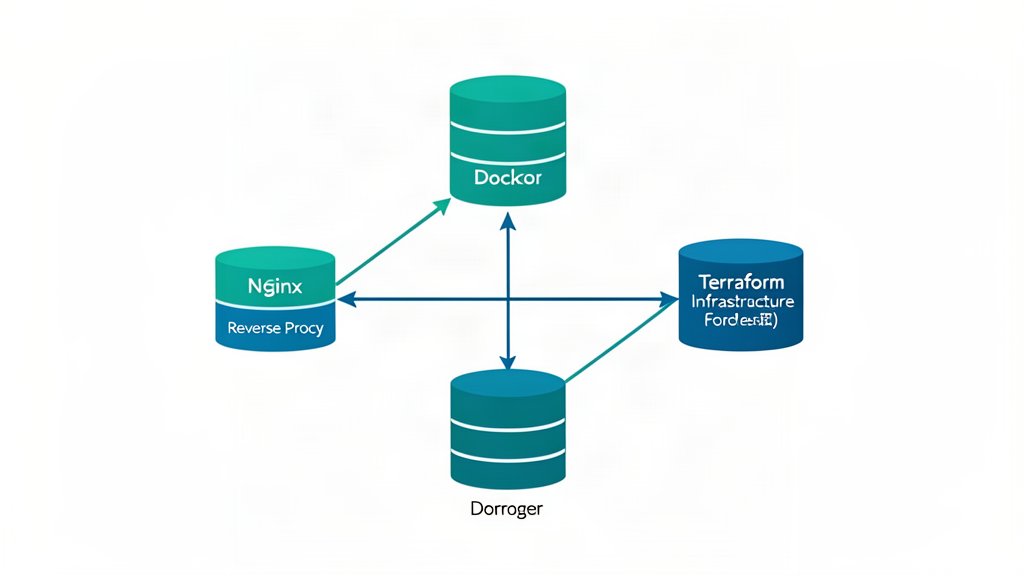
Nginx, Docker, and Terraform create a small infrastructure stack that stays understandable as the system grows.

A practical checklist for deploying a static Astro site with Nginx on Ubuntu 24.04, including caching, permissions, and asset handling.