
How to Use Podman for Rootless Containers and Small Server Workloads
Podman becomes especially practical when you use it for rootless containers, explicit service management, and small workloads that do not need heavy orchestration.
Tag
14 matching blog articles with repeat coverage under this topic.
Tag wiki
Definition
Linux is the operating system foundation behind many servers, developer environments, cloud instances, and containerized delivery systems.
Why it matters
It matters because system services, networking, permissions, package tooling, automation, and deployment operations all behave at the operating-system layer.
In this archive
These articles use Linux in system administration, hosting, deployment, permissions, automation, and infrastructure operations contexts. It currently appears across 2 categories, mainly Infrastructure & DevOps, Web Development.
Reference
Often appears with
Podman becomes especially practical when you use it for rootless containers, explicit service management, and small workloads that do not need heavy orchestration.
Podman is a daemonless container engine with strong rootless support, and that makes it a practical fit for teams that want simpler container operations and tighter Linux integration.
A practical checklist for deploying a static Astro site with Nginx on Ubuntu 24.04, including caching, permissions, and asset handling.
Add a user to the www-data group on Ubuntu or Debian so Apache-served files can be managed with the right permissions.
Practical guide to changing Apache MPM directives on Ubuntu and CentOS so tuning decisions turn into actual server configuration.
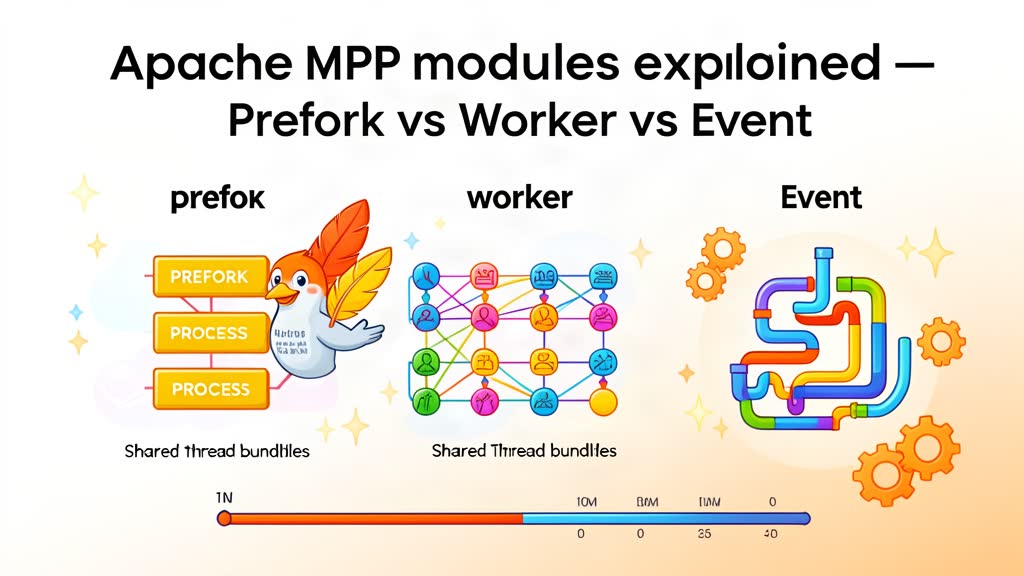
Learn how Apache Prefork, Worker, and Event MPMs differ so you can choose the right process model for performance and stability.
Learn why aggressive Apache limits can push a server into swap thrashing and how that leads to slowdowns, instability, and crashes.
Understand the Apache MPM directives that shape concurrency, memory use, and request handling across Prefork, Worker, and Event.
Install phpMyAdmin on Ubuntu 20.04 and lock it down so database management stays accessible without exposing an easy target.
Step-by-step guide to installing Linux, Apache, MySQL, and PHP on Ubuntu 20.04 so you can host PHP applications on a standard LAMP stack.
Increase Linux inotify limits to fix Gatsby's 'limit of file watchers reached' error during local development on Ubuntu or Debian.
Download and install Google Fonts on Ubuntu or Debian so they are available system-wide to desktop apps and design tools.
Step-by-step guide to creating and enabling swap space on Ubuntu or Debian when a server needs more virtual memory.
Enable Apache mod_rewrite on Ubuntu or Debian so applications and .htaccess rules can handle clean URLs and redirects.